

Legacy / A practice in motion since 2009
More than a record
of journeys.
Across ten Road Trips completed between 2009 and 2022, Invisible Borders developed a method of moving, making and thinking together. Artists travelled through cities, border crossings and ordinary places; produced photographs, films and writings; convened workshops and conversations; and returned with experiences that continued through exhibitions, publications and new collaborations.
This legacy is not presented as a closed history. It is material that can be brought into renewed relation with the present.

Legacy in brief
2009
Founded in Nigeria
10
Road Trips completed through 2022
30+
Countries crossed or connected through project activity
190+
Artists engaged through participation and collaboration
A practice through time
Journeys, and what
came of them.
A selected chronology rather than a complete one. Where the record is still being reconstructed, the year stands and the detail waits.
-
2009
InstitutionJourney
A practice begins
Invisible Borders is founded in Nigeria. The first Road Trip establishes movement as a method of artistic research and exchange, and the project is presented at the Bamako Festival of Photography.
Nigeria / Mali
-
2011
JourneyInstitution
Across the continent
The Lagos–Addis Ababa Road Trip extends the journey across West and East Africa. Invisible Borders is formally registered in Nigeria.
Lagos – Addis Ababa
-
2012
ExhibitionPresentation
A growing public field
The project enters exhibitions and conversations at the New Museum and Creative Time Summit in New York, Biennale Benin, and the African Union Centre in Addis Ababa.
New York / Cotonou / Addis Ababa
-
2014
Journey
Lagos to Sarajevo
The Trans-Continental Road Trip connects Lagos and Sarajevo, bringing Africa and Europe into one continuous field of movement and encounter.
Lagos – Sarajevo
-
2015
ExhibitionRecognition
A Trans-African Worldspace
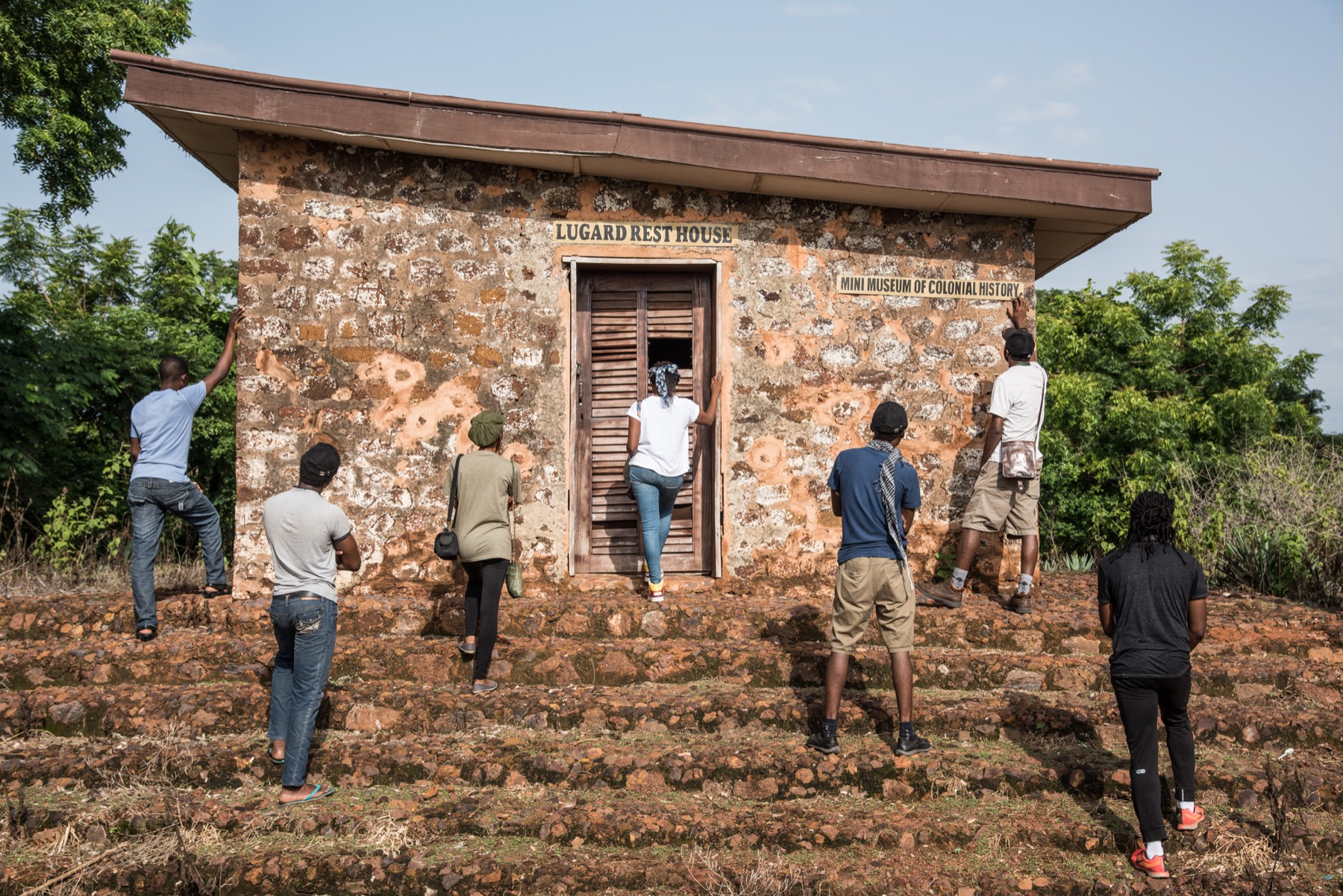
Invisible Borders participates in the 56th Venice Biennale, All the World’s Futures, curated by Okwui Enwezor. The installation A Trans-African Worldspace brings five years of journeys, images, films, writings and cartographic thinking into a collective presentation.
Venice
-
2016–2018
JourneyExhibition
Borders within
The project turns toward journeys within Nigeria while continuing its international presentation. The period includes two Trans-Nigerian Road Trips, the Lagos–Kigali journey of 2018, and exhibitions at Unseen Amsterdam, Centre Pompidou and FOAM.
Nigeria / Amsterdam / Paris / Kigali
-
2019–2020
ExhibitionEncounter
Expanding the field
Projects, exhibitions and masterclasses in Cologne, São Tomé, Bamako and Dhaka extend the project’s field of artistic and pedagogical exchange.
Cologne / São Tomé / Bamako / Dhaka
-
2022
JourneyCollaboration
Whispers of the Wilderness
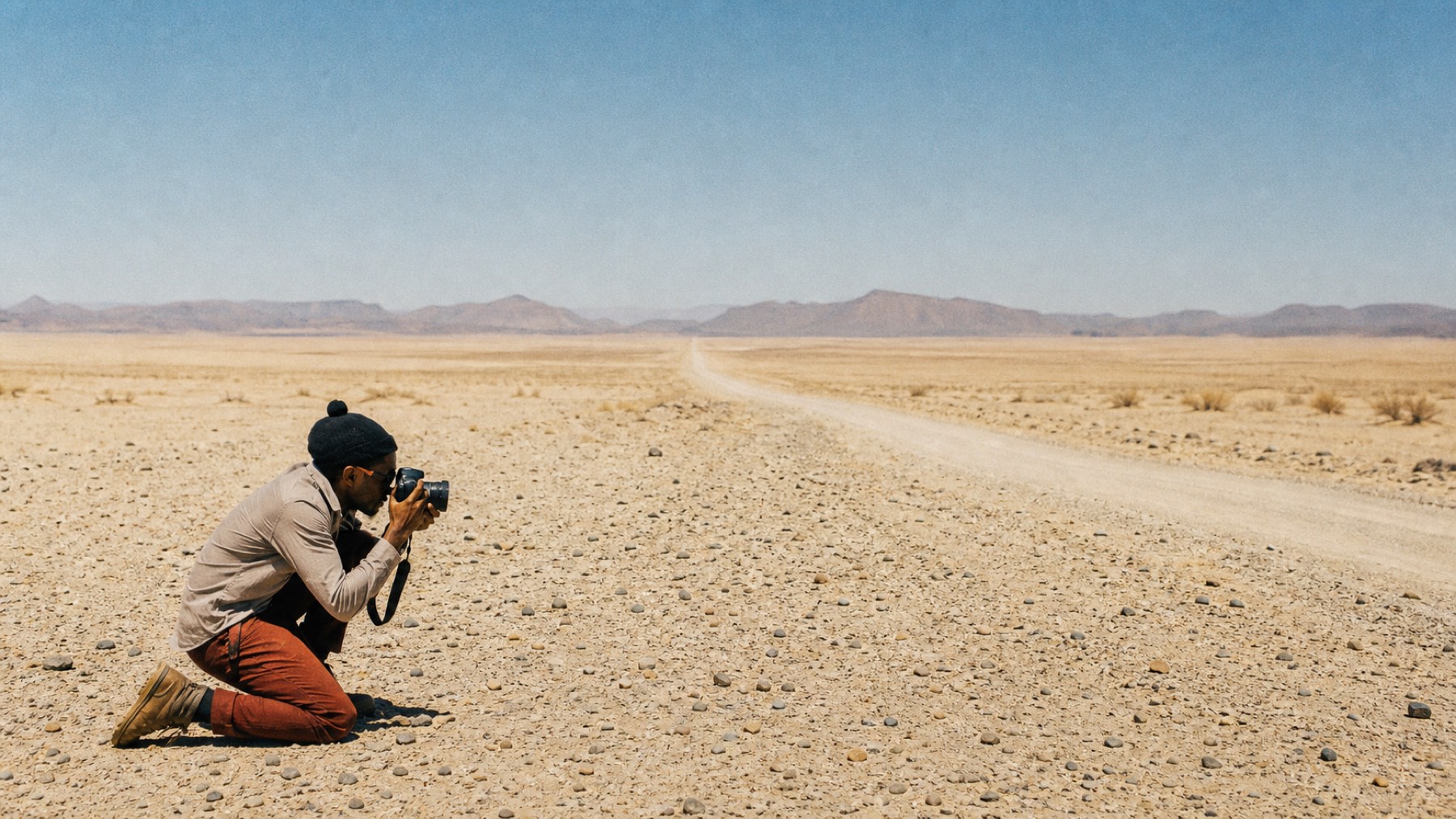
The tenth Trans-African Road Trip travels through Botswana, Namibia and Angola with the National Geographic Society, combining field research, photography, performance, exchange and collaborative artistic work.
Botswana / Namibia / Angola
-
2027
Upcoming Journey
The next movement
The eleventh Trans-African Road Trip, Re-tracing the Path of Stars, travels from Marrakesh to Lagos over 48 days, from 23 January to 11 March 2027. It is the practice continuing, not a completed part of the record.
Marrakesh – Lagos
The Road Trips
Ten editions,
one body of practice.
Each journey assembled artists of different practices, countries and levels of experience, and treated the road itself as the site of research. Where a route is still contested in the source record, the year stands alone.
-
2009
Lagos – Bamako
The first edition
The journey that established the method: artists travelling together, working from encounter rather than assignment. The first border was crossed at Cotonou on 3 November.
-
2010
Lagos – Dakar
Second edition
A second cohort travels, and the practice of publishing from the road takes hold.
-
2011
Lagos – Addis Ababa
West to East across the continent, and the year the organisation is formally registered in Nigeria.
-
2012
Lagos – Libreville
Fourth edition
The cohort widens beyond Nigeria, drawing artists from across the continent into the journey.
-
2014
Lagos – Sarajevo
Trans-Continental
The inherited division between Africa and Europe is tested by driving across it.
-
2016
Borders Within 1
Trans-Nigerian
The question of borders turned inward, to the lines drawn within a single country.
-
2017
Borders Within 2
Trans-Nigerian
A second internal journey, deepening the enquiry into internal difference and movement.
-
2018
Lagos – Kigali
The continent crossed again, this time eastward to Rwanda.
-
2020
Trans-Bangladeshi Road Trip
Ninth edition
The cohort extends beyond the continent, with artists from Bangladesh and the DRC joining the journey.
-
2022
Whispers of the Wilderness
Botswana, Namibia and Angola
The tenth edition, made with the National Geographic Society.
Journey records — routes, cohorts, works and encounters — will be explorable through the Moving Archive.
Beyond the road
The journey is
a method, not a total.
What the road produced kept working long after the vehicles stopped. These are the forms the practice took between and after the journeys.
Exhibitions
Museums, biennales and festivals where the journeys were presented as a collective proposition rather than a set of individual works.
Workshops and encounters
Masterclasses, conversations and meetings with artists, students and communities in the places the journeys passed through.
Public presentations
Talks and summits where the project’s questions about borders entered wider political and cultural discourse.
Writing and publishing
Daily writing from the road, later essays, and the publications through which the journeys were thought again.
Commissions and collaborations
Artistic work made with institutions and organisations that met the project on its own terms.
Archive and research
The accumulating record of images, films, writings and encounters, and the ongoing work of holding it in relation.
Selected public moments
Where the work
met the public.
A selection, not a full record. The wider track record of exhibitions, presentations and recognitions is being checked against original documents before it is published.
- 2009 Bamako Festival of Photography Bamako
- 2012 New Museum and Creative Time Summit New York
- 2012 African Union Centre Addis Ababa
- 2015 A Trans-African Worldspace, 56th Venice Biennale Venice
- 2016 Unseen Photo Fair and Festival Amsterdam
- 2017 Centre Georges Pompidou and FOAM Paris and Amsterdam
- 2019 São Tomé Biennale and Bamako Festival of Photography São Tomé and Bamako
- 2020 Dhaka Art Summit Dhaka
- 2022 Vera List Center for Art and Politics New York
Writing, publishing and the image
The journey was
always written.
From the earliest editions the artists published as they travelled — photographs, film and writing sent out daily from the road. Writers including Nike Ojeikere, Emmanuel Iduma, Yinka Elujoba and Kechi Nomu made the journey legible as it happened, and afterwards.
That precedent is not the same thing as the Journal. IBJ is the present and future editorial platform, not a new name for the historical blog: it commissions, edits and publishes work that extends the enquiry rather than reprinting the record.
Relations that made the work possible
Historical
relationships.
Organisations associated with earlier editions, exhibitions and support. These are credited in their historical context and should not be read as current partnerships.
- Open Society Foundation of West Africa
- National Geographic Society
- Prince Claus Fund
- Arts Collaboratory
- Goethe-Institut
- Institut Français
- African Union, Border Programme
- European Union
- New Museum, New York
- Dhaka Art Summit
- Heinrich Böll Foundation
- Ford Foundation
The record
remains open.
This page offers a path through the history of Invisible Borders. The Moving Archive will allow the journeys, people, works, writings and encounters within that history to be explored in deeper relation.
Enter the Moving Archive Forthcoming Follow the next journey
Interested in partnering, supporting or developing a collaboration with Invisible Borders? View our Institutional Profile for an extended account of our journeys, methods, track record and relationships.