

Re-member / The Moving Archive
A Volatile Negotiation
Between Past and Present
It is not so much about telling a story as it is about demystifying the image. It is not about proliferating images or propagating further stories of crossing. Rather, it is about inhabiting the space between preconceived projections of the world and freshly acquired perception.
The Moving Archive is being reconstructed. This page sets out what it will hold and how it is being built. It is not yet a place to search.
The hyphen
Re-member,
not remember.
The hyphen is doing work. To re-member is not to recall — it is to put members back together: to reassemble a body that has been dispersed. To gather, and then to put in relation.
Fifteen years of travelling produced photographs, films, writings, recordings, documents and correspondence, held across cameras, drives, inboxes, old platforms and the memories of the people who were there. Much of it has never sat in one place. Some of it has been lost.
Reconstruction is therefore not an administrative task but part of the practice. What is gathered is not returned to a fixed past; it is brought back into relation with the present, where it can be read again.
And moving
Always in conversation
with the present.
The archive is not emptied out in order. Material is assembled and brought into public view as it becomes relevant to what the project is doing now — a journey being planned, a question asked again, a place returned to.
Release follows relation rather than chronology. That is what keeps the archive in conversation with the present, rather than behind it.
What it will hold
The material,
and its relations.
The archive is organised by relationship rather than by folder. A photograph belongs to a place, a journey, a person and a question at the same time. Where a category has published records, it opens.
-
Photographs
Frames made on the journeys and around them, with the caption record each one carries: place, year, journey, photographer and rights, stated where they are known and left open where they are not.
In reconstruction
-
Writing
Field notes, essays, correspondence and the texts that travelled alongside the images — including work written about the project by others, and work written on the road and never published.
2 records published
-
Film and sound
Footage, recordings, interviews and the documentary material made about the project by others.
In reconstruction
-
Documents
Route plans, permits, border papers, budgets, printed matter and the ordinary administrative traces of moving a group of artists across a continent.
In reconstruction
-
Testimony
Accounts from participants and from the people met along the way. Some of the record exists only as memory, and is being gathered before it goes.
In reconstruction
-
Relations
The links between all of the above: which frame belongs to which crossing, which text answers which photograph, which participant was present at which encounter.
Historical scope
What the record
has to cover.
The material begins in 2009 and has not stopped accumulating. These are the outlines the reconstruction has to account for.
- 2009 Founded in Nigeria
- 10 Road Trips completed through 2022
- 30+ Countries crossed or connected through project activity
- 190+ Artists engaged through participation and collaboration
The completed journeys
- 2009 Lagos – Bamako
- 2010 Lagos – Dakar
- 2011 Lagos – Addis Ababa
- 2012 Lagos – Libreville
- 2014 Lagos – Sarajevo
- 2016 Borders Within 1
- 2017 Borders Within 2
- 2018 Lagos – Kigali
- 2020 Trans-Bangladeshi Road Trip
- 2022 Whispers of the Wilderness
All ten completed journeys now carry a route. The last three — the second, fourth and ninth editions — were open questions in the written record until the studio settled them. That is the reconstruction working: the list is only as good as what can be confirmed, and it changes when something is.
The reconstruction
How it is
being rebuilt.
Slowly, and in public. The archive is being assembled into a database the organisation controls, rather than rented from a platform that may not outlast it.
- 01
Gather
Material is recovered from drives, cameras, old sites and the people who hold it. Earlier databases are treated as sources to import from, never as the live record.
- 02
Establish
Each item is checked against the sources that can be evidenced. Where a date, place or attribution cannot be confirmed, the field is left open rather than filled with a plausible guess.
- 03
Relate
Items are connected to the journey, the place, the people and the questions they belong to, so that the archive can be read across rather than only down.
- 04
Open
Records are published as they become sound. The archive will grow in view rather than arrive finished.
Three records
What a record
looks like.
Three samples, shown to the standard every record will meet: what it is, where and when, and what it is connected to. They are an illustration of the form, not a selection from a finished archive.
-

Crossing at Rosso
-

At the Asaba memorial
-
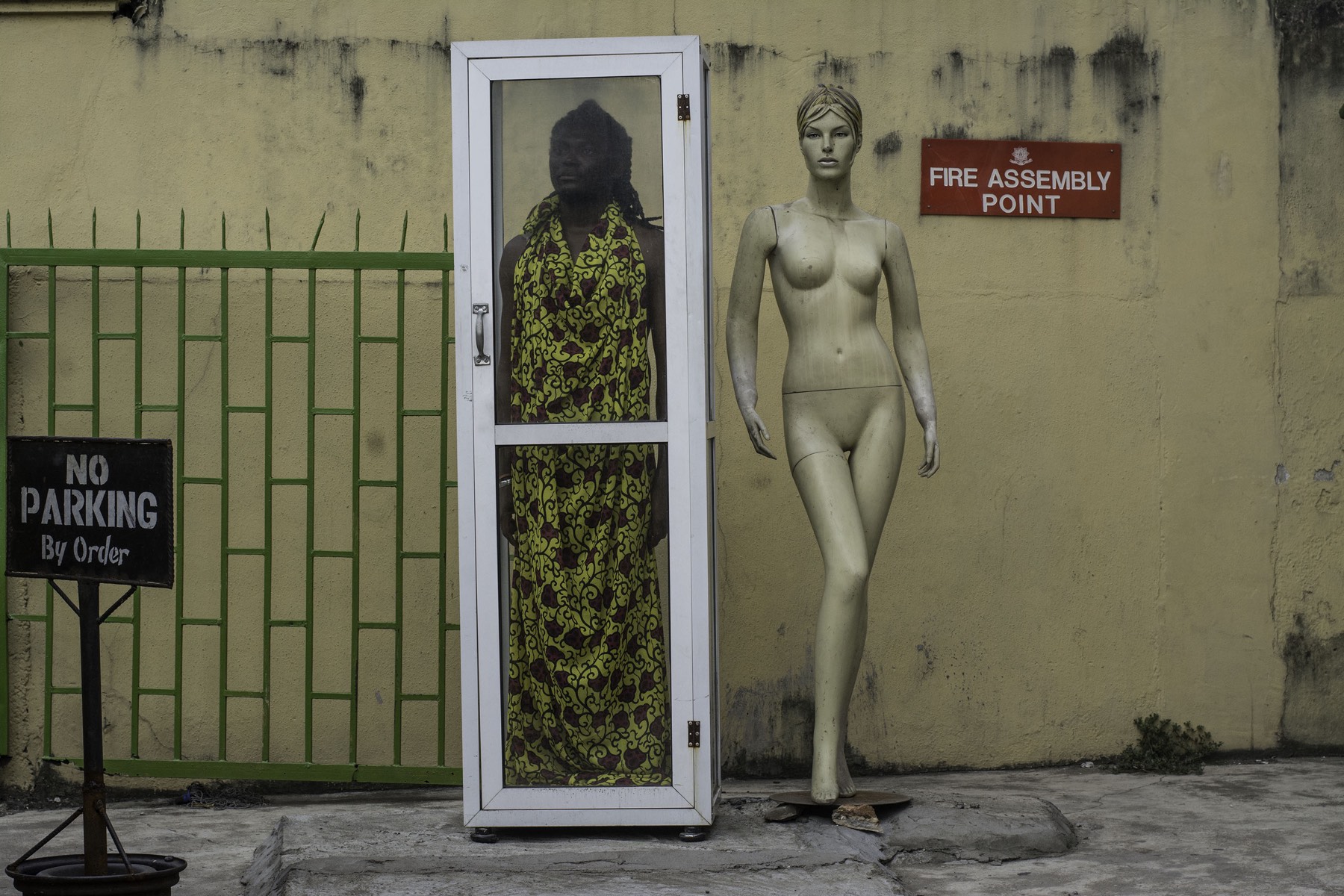
Fire assembly point
Contribute
You may hold part
of this record.
If you travelled with us, hosted us, were photographed by us, or hold material, correspondence or a memory from any of the journeys — the archive is missing things only you can return to it. Corrections to what is already published are as welcome as additions.
Contribute to the archive About the project The institutional record