

Photography / Across the journeys
Iconic images of Invisible Borders
The complete first series of Iconic Images of Invisible Borders: photographs from the early journeys, with the artists’ words and contextual accounts preserved alongside the work.
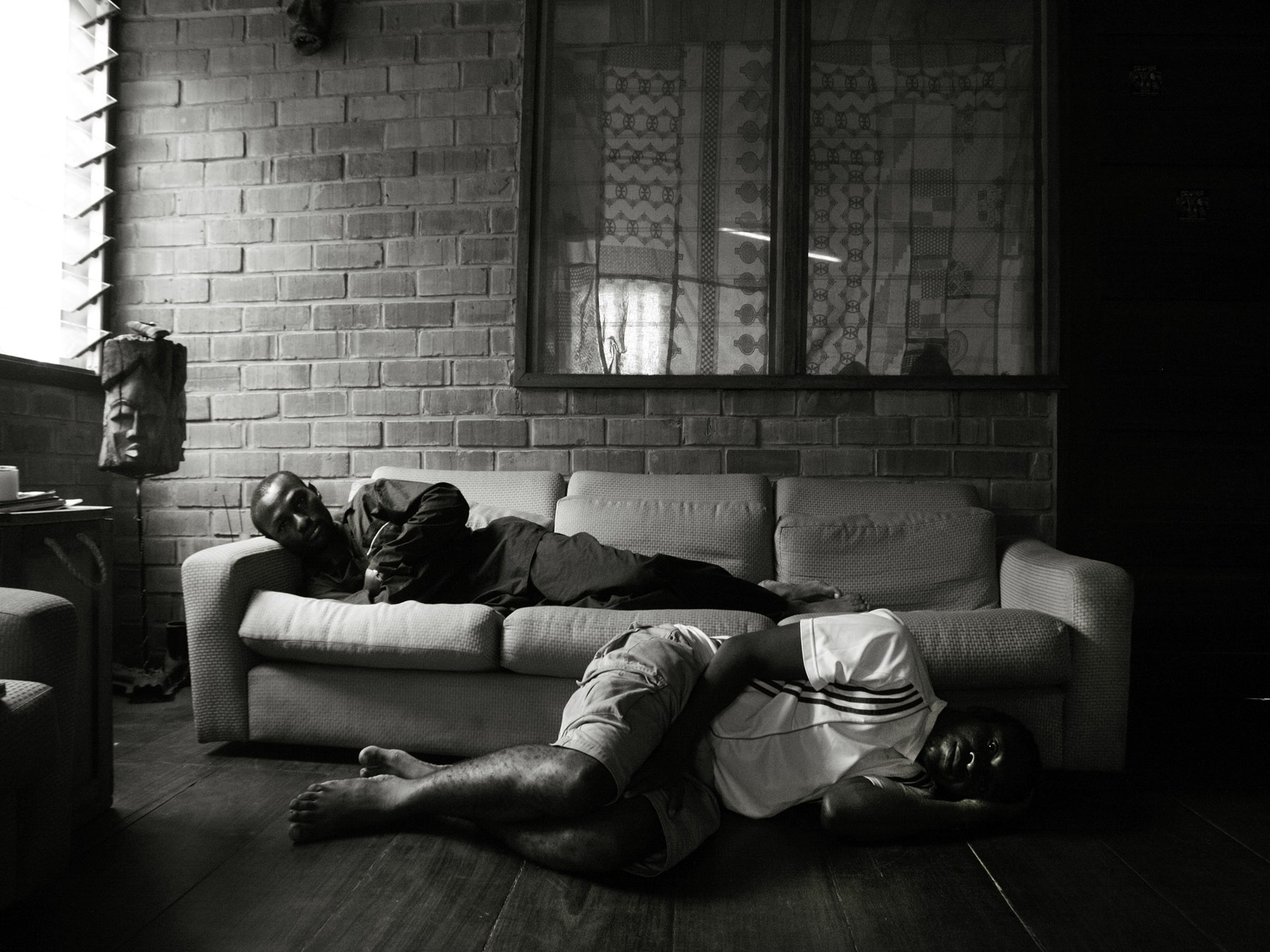
This is a part of a larger body of work by Uche Okpa Iroha, called "Finding Rest", which he produced throughout the length of the very first edition of the Invisible Borders Road Trip. it involved self-potraits where he inserted himself in different situations and places, often lying in various sleeping positions as if to find comfort and relaxation in an obviously uncomfortable setting. In this image, there is a collaboration with one other participant, Ray Daniels Okeugo. This sort of image speaks of that intersection between the work of an artists in the trip and the actual documentation of the event of the trip itself. At times, the artist's works tend to blur those lines.

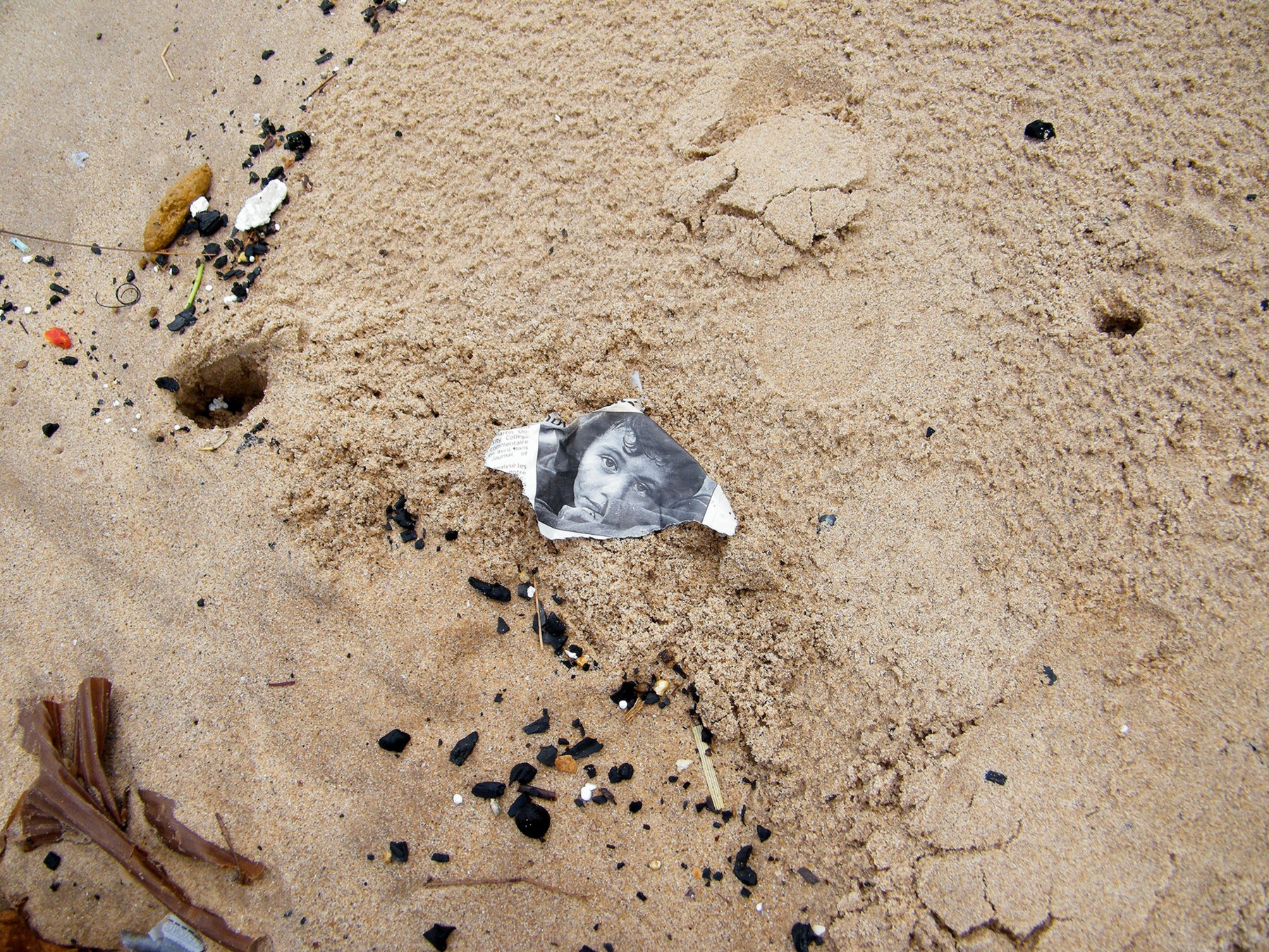
Ray Daniels Okeugo was known for his ability to capture the uncanny, the akward and often the "left-over" in the banal, everyday space. This image was made at the beach in Cotonou. This remnant from a journal bearing the face of a child (boy or girl?) evokes an unsettling feeling, and makes one wonder how far this information had traveled up to this shore. In many ways the photographers of Invisible Borders sought to visually engage with the spaces they encounter, doing that naturally, using that opportunity first to educate themselves as regards the intricacies of their own surrounding. This sort of image is a rendition of that very act.

This image was made in the popular downtown area of Addis Ababa, known as Piassa. This image have been exhibited and published frequently in Magazines and journals. It also became the poster image for the 3rd edition of the IB road trip in 2012. The image was made during the 3rd edition of the IB road trip in which Ala Kheir was one of the participants, travelling with the team from Khartoum to Addis Ababa
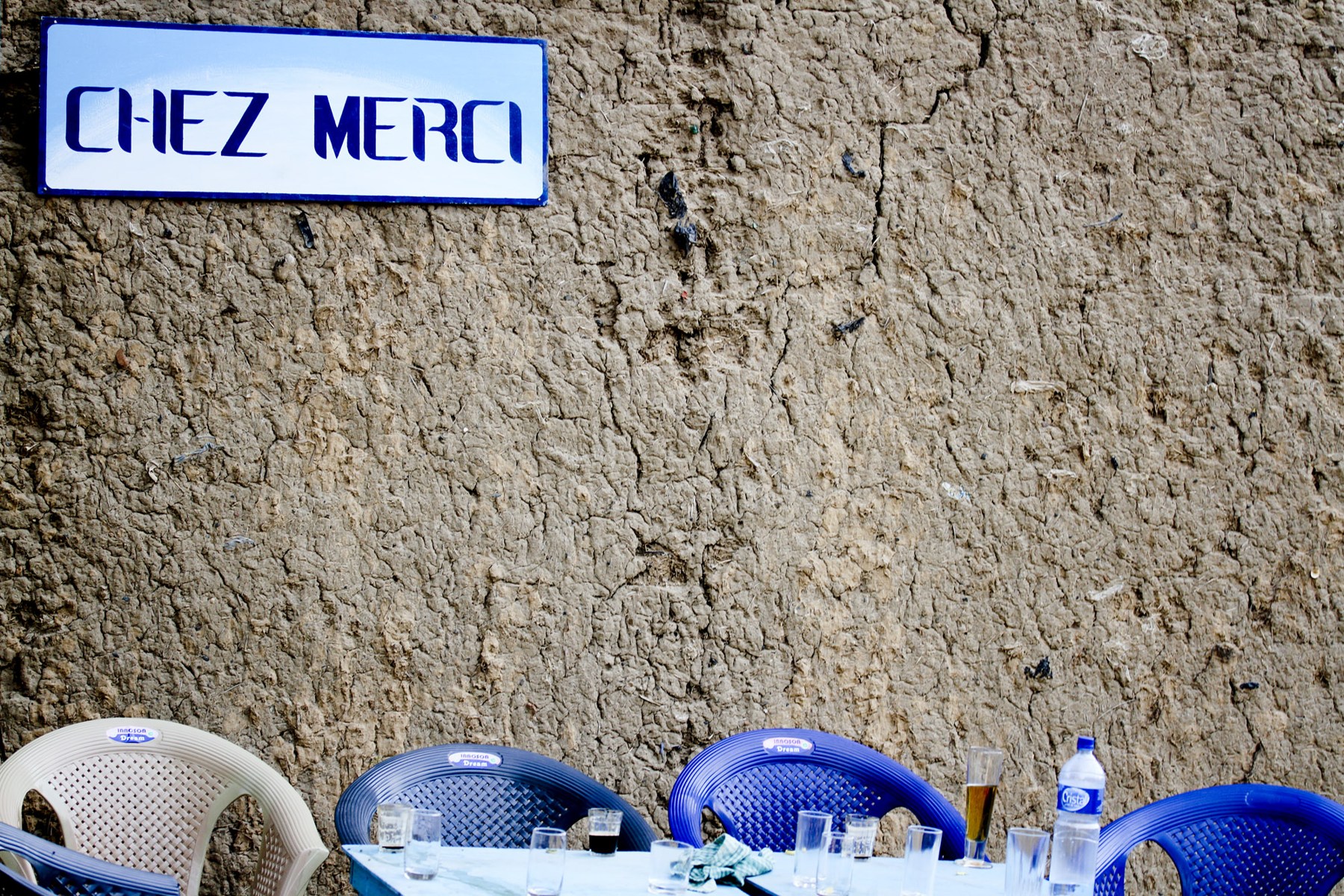
This is one of the images made by Jumoke Sanwo under the series "Things that I see" and as the title of the body of work implies, it is simply a rendition of myriad forms of observation, but what is captivating is that Jumoke borrows from her attributes of a lifestyle photographer. Her emphasis on details and colour elevates this scene beyond a mere juxtapostion of object in space.
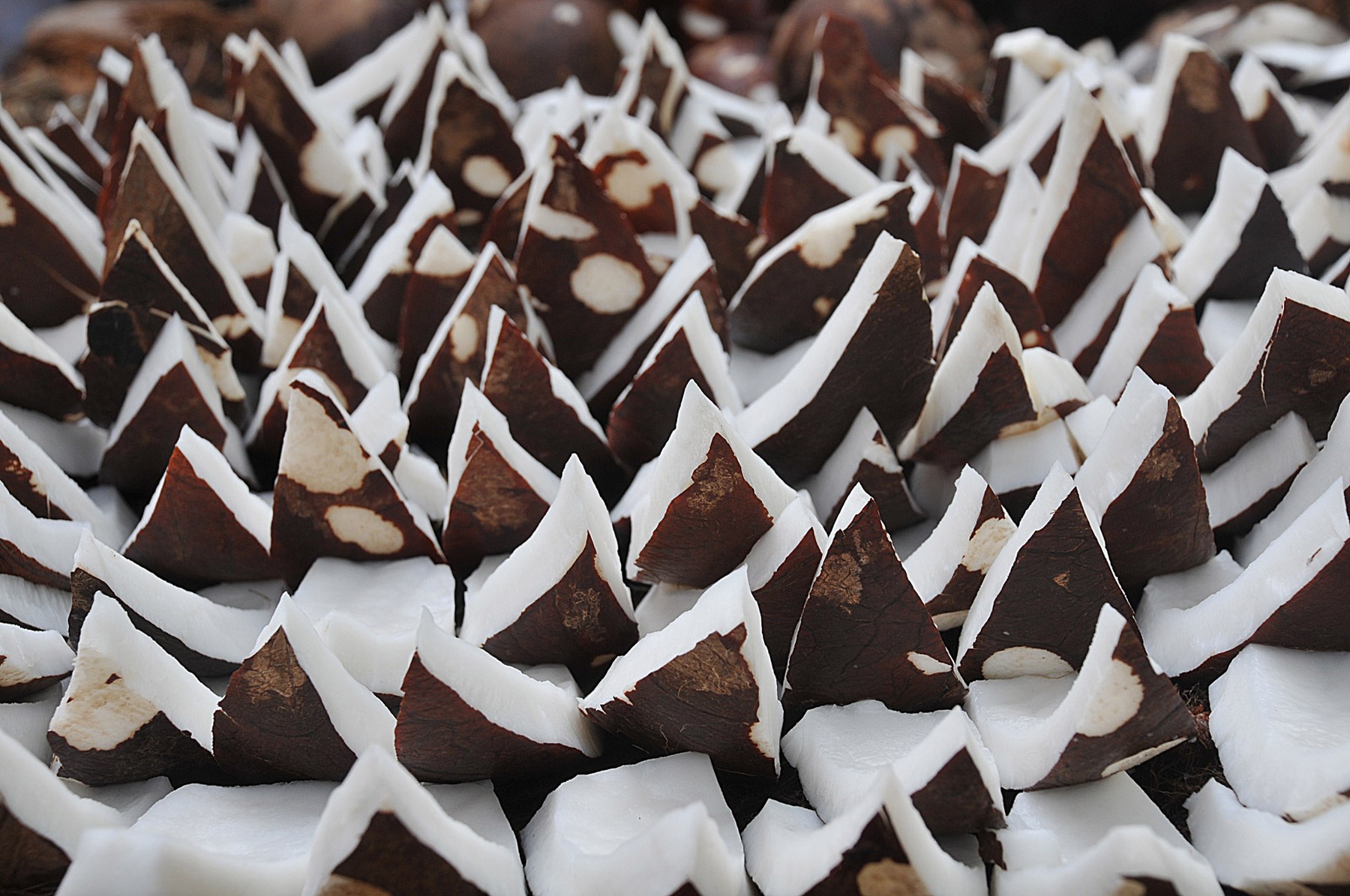

Lilian Novo Isioro is a photographer who is drawn towards photographing women, not for the mere sake of making an interesting subject out of them, but because i she identifies with them in their struggles to transcend the sterootypes attached to womanhood. In his work during the Invisible Borders road trip 2012, she was dedicated to championing them, working hard to portray them not as victims of their circumstances but conquerors. This image is a part of larger body of work titled "Corporate Life of a Market Woman"

This image embodies that improvisation and sponteinity in the arrangement of people and spaces that is typical within an African context. In Invisible Borders we are drawn to images which draws from the inventiveness of the everyday space. The representation of the intersection of people, things and spaces. Often times that everyday space embodies the ingenuity of the attempts made by the people to circumvent the limitations they are subject to as a result of a deficient socio-economic system.
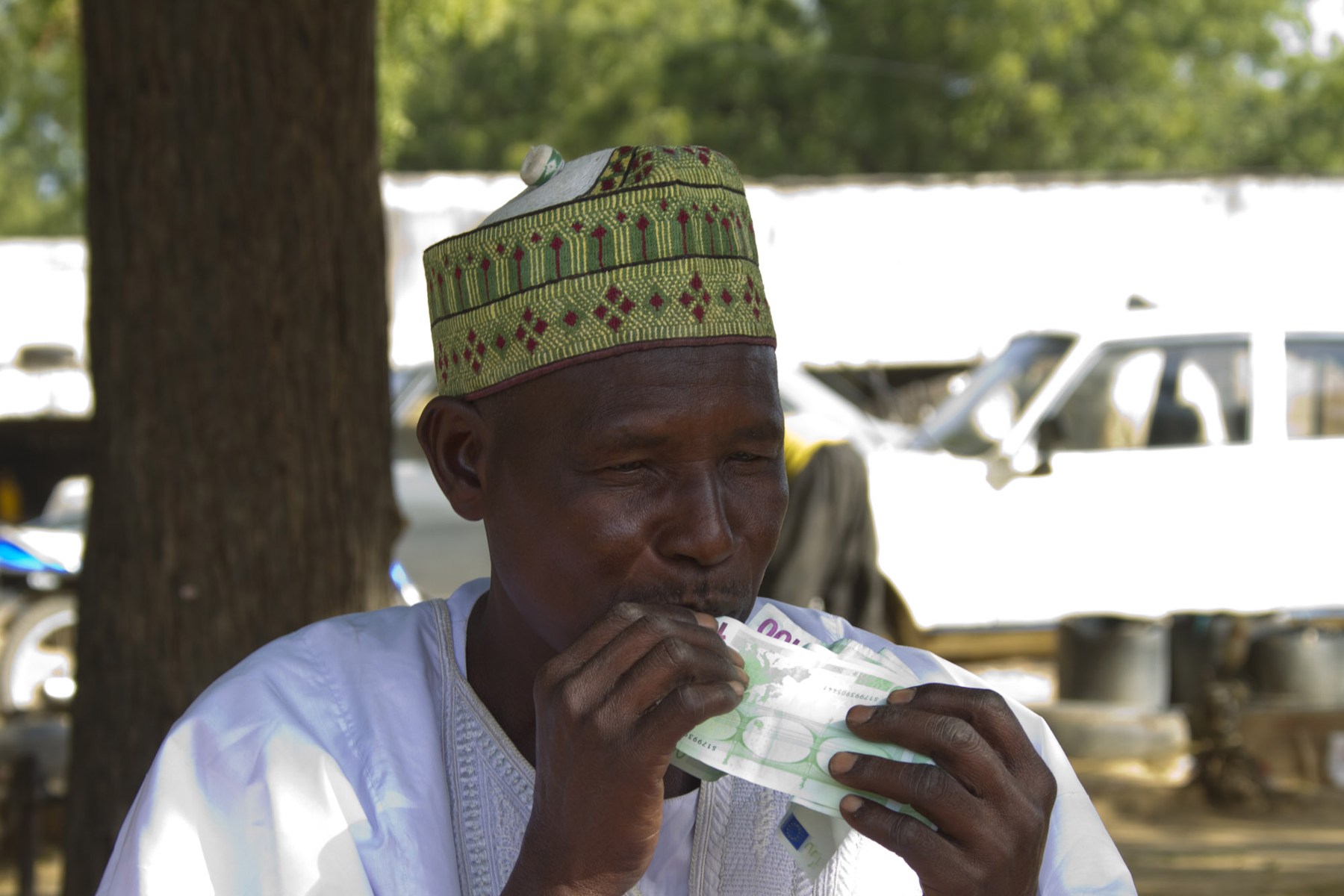
A money changer at the market in the town of Koussiri in Cameroun. Koussiri is the border town between Cameoun and Tchad. The money changer confirms the authenticity of the euro bill by tasting the tip of the money.
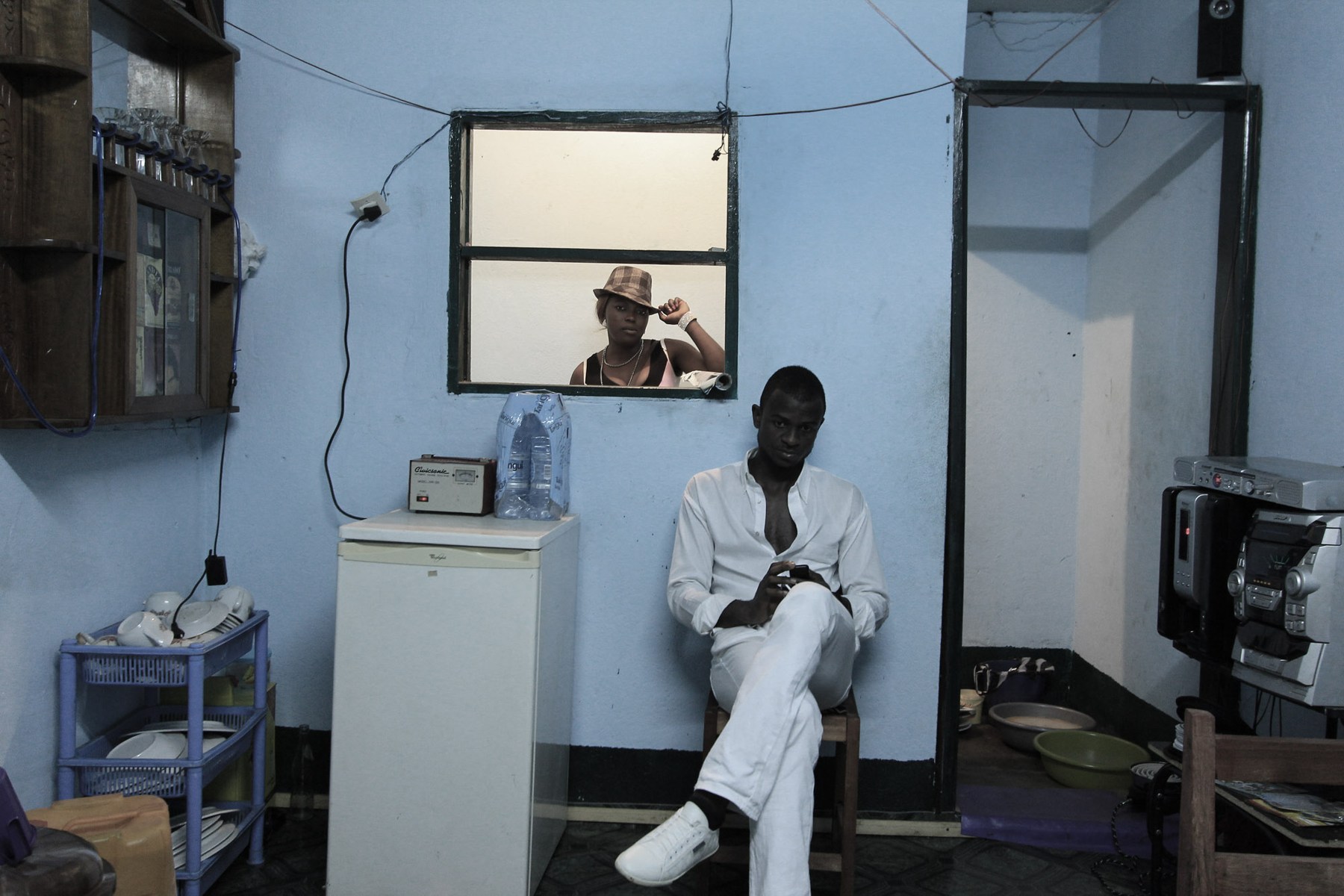
Emeka Okereke: "We came in here to eat, but eventually we did not find the kind of food we wanted, but I struck off a conversation with the lady, who was looking so cool in her hat that evening. she was the extrovert, and the guy seemed more like the passive one, I remember that was what I said to myself. My intention was to convey that in an image that has both of them in it. I posed them according to how I wanted them to sit, no it was not a candid photo, it was very delibrate".

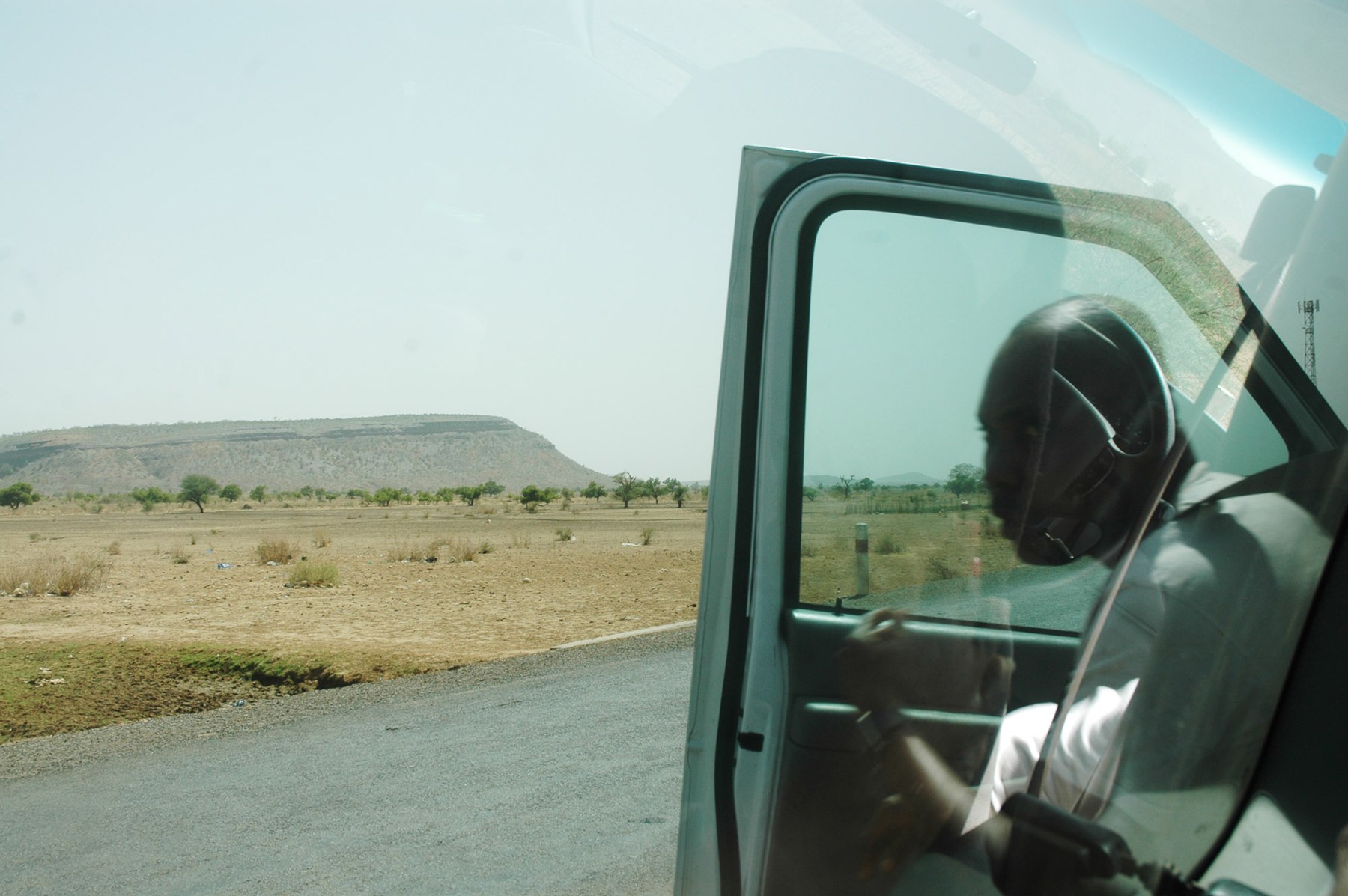
En route Ethiopia from Sudan, often times we face an expanse of roads. We are often amazed by the beauty we encounter, but also of that realisation that we have just injected ourselves into a once-in a-long-while experience, that was only prompted by the mere wish toward movement. Moments like this come with a lot of mixed feelings, because it reminds us that there is an extent to which we can become part of this beauty, just like we are limited and "protected" by the confines of the vehicle, the tunnel from which we peer into these experiences. The beauty also presents an obstacle by merely brushing with our inward impediments.
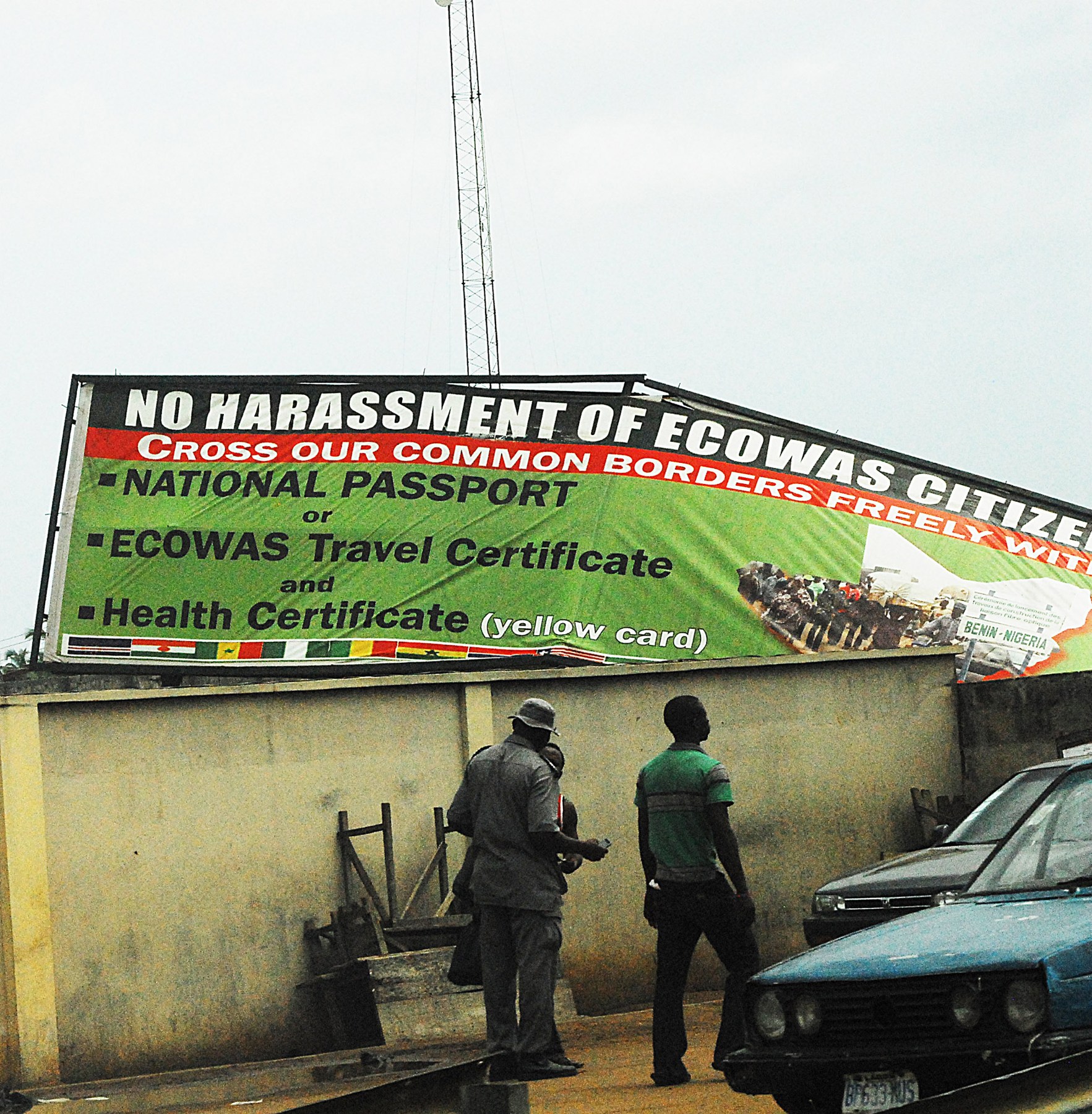
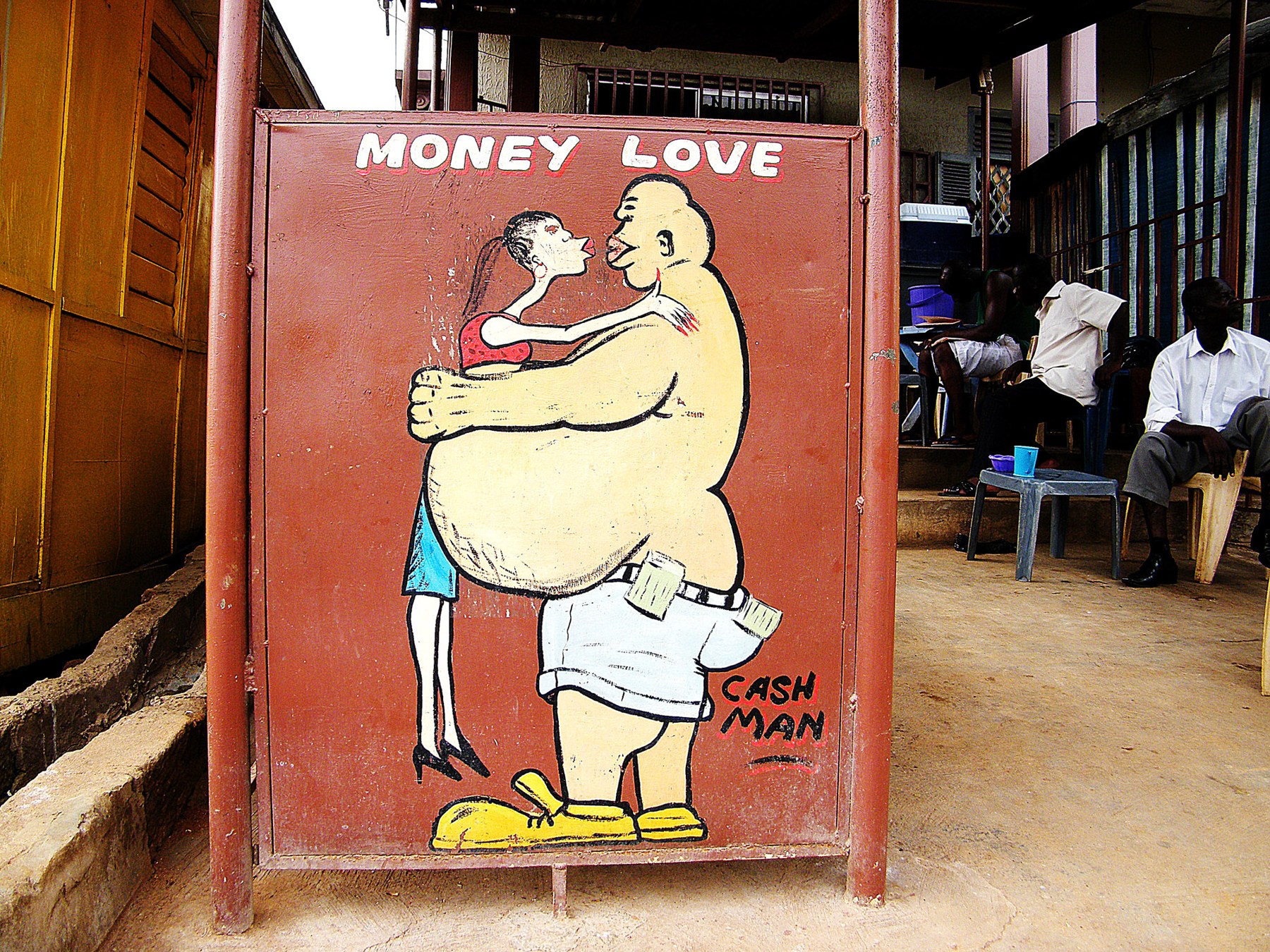
This image was made during a walkabout in Kumasi, during IB 2010, on the way to Dakar from Lagos. Images like this strongly the depicts Invisible Borders' aesthetic philosophy of photographing everyday spaces and colloquial occurances. The first border we had to transcend was to photograph everyday spaces which is usually regarded as bland and banal.

Emeka Okereke: "We stopped and there was a barrage of roasted maize sellers. This particular lady was intrigued by me making photos. she stood right there as I made photos of her, she smiled all the time sweety, we made some jokes, as to how she like good things. and ofcourse, i bought my maize from her. It was a moment for what it was: by the virtue of the maize, and the intention to travel and see. Our paths crossed briefly, from that an image was born"
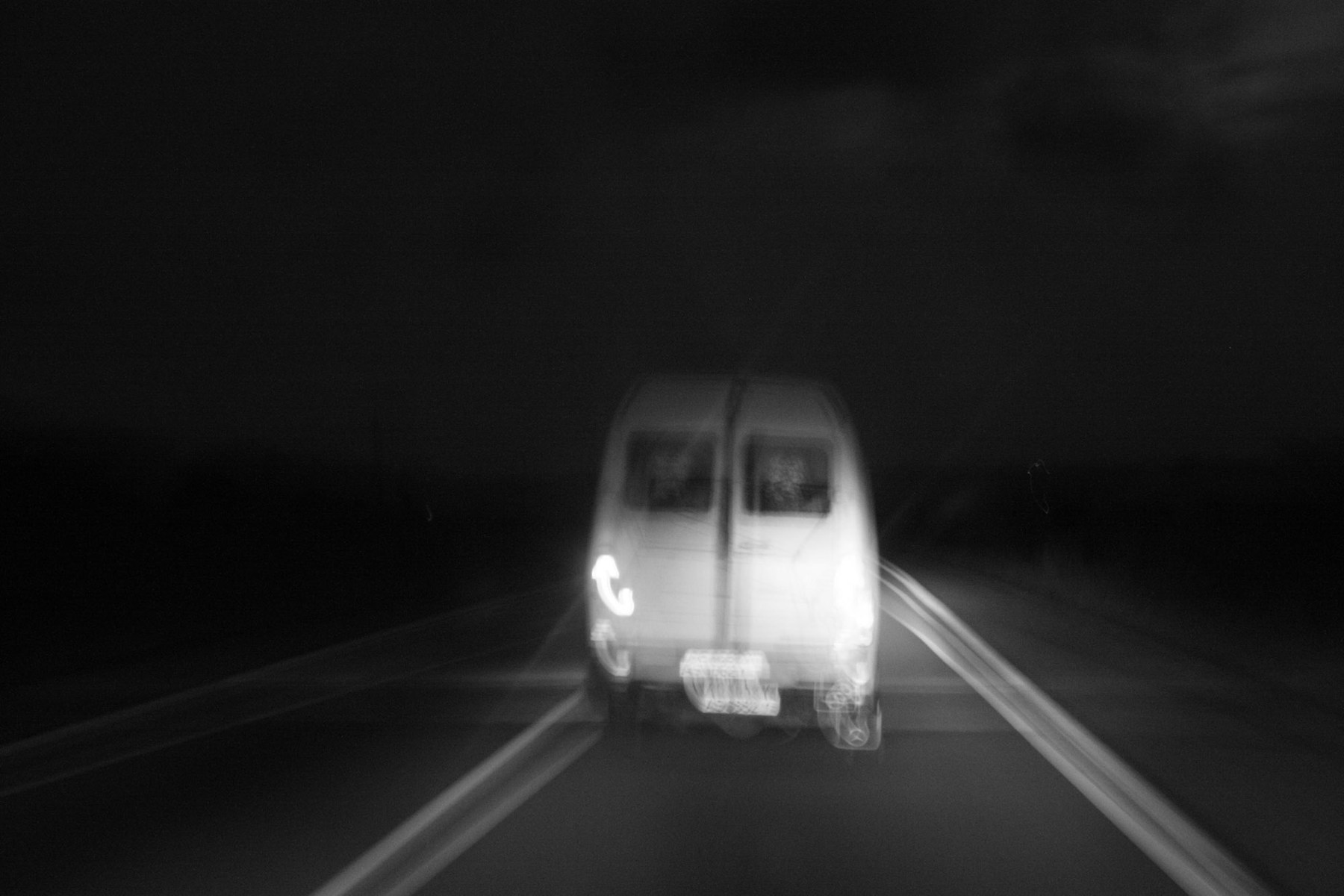
This image forms a part of a body of work titled "Point of Blur". In this series, Emeka Okereke attempts to depict the shakiness and uncertaintities of being a in a journey in which the destination is secondary.
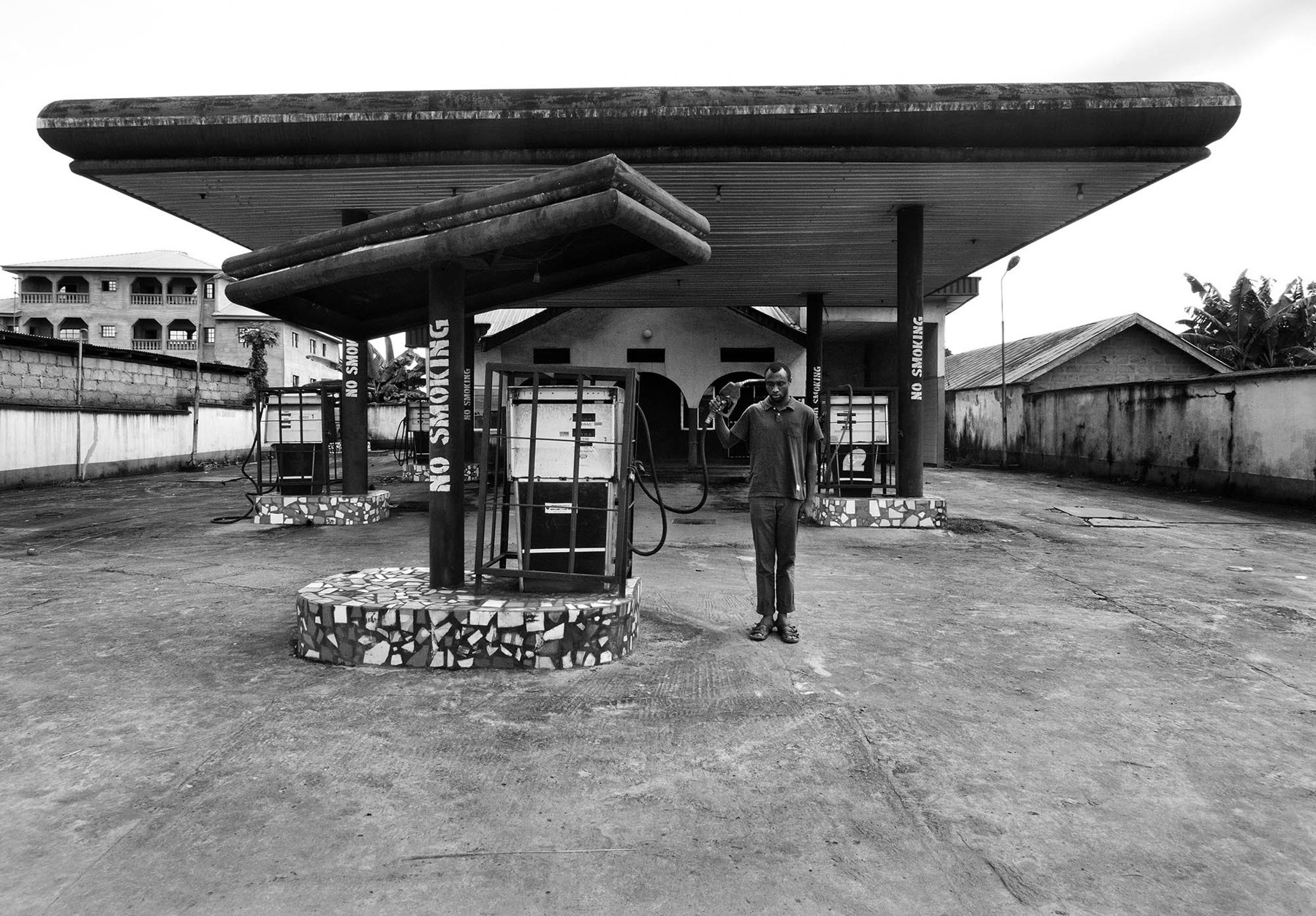
Emeka Okereke: "As we traveled through Aba in Nigeria, we experienced many deserted petrol station. It created a perfect setting to create this work which is a subtle reference to the paradox of the oil industry and that of all ntural resources as a whole. It is important to note that this was as a result of a collaboration with Emmanuel Iduma the writer of the road trip. Images of this sort embodies the many acts of interaction, reflection and collaboration between artists of the road trip across disciplines and mediums.

Kemi Akin-Nibosun: "My project is about imposing; crossing several borders and forming relationships. Pokart is a pseudo name derived from a combination of my initials. The ‘waz ere’ is a reference to a popular contemporary English graffiti culture of which I’m very much subscribed to. My personal take is that we need to be more lenient on the emphasis of telling “a story of Africa”, and concentrate more on the process which begets the story. Let Africa be the canvas! It’s one of two things; Africa can be your canvas or your catalyst and this is one of the thought process I attempt to convey".


This work was made in Accra, Ghana during the 2nd edition of the Invisible Borders Road Trip from Lagos to Dakar. Made by Charles Okereke, it is a representative of his engagement with the texts, icons and symbols which embodies sensibilities of the street and informality of the everyday space. It then goes beyond the written text in the image, and to address the issue of gender tension, not necessarily in a conflicting context, but in an inquisitive and curious sense.
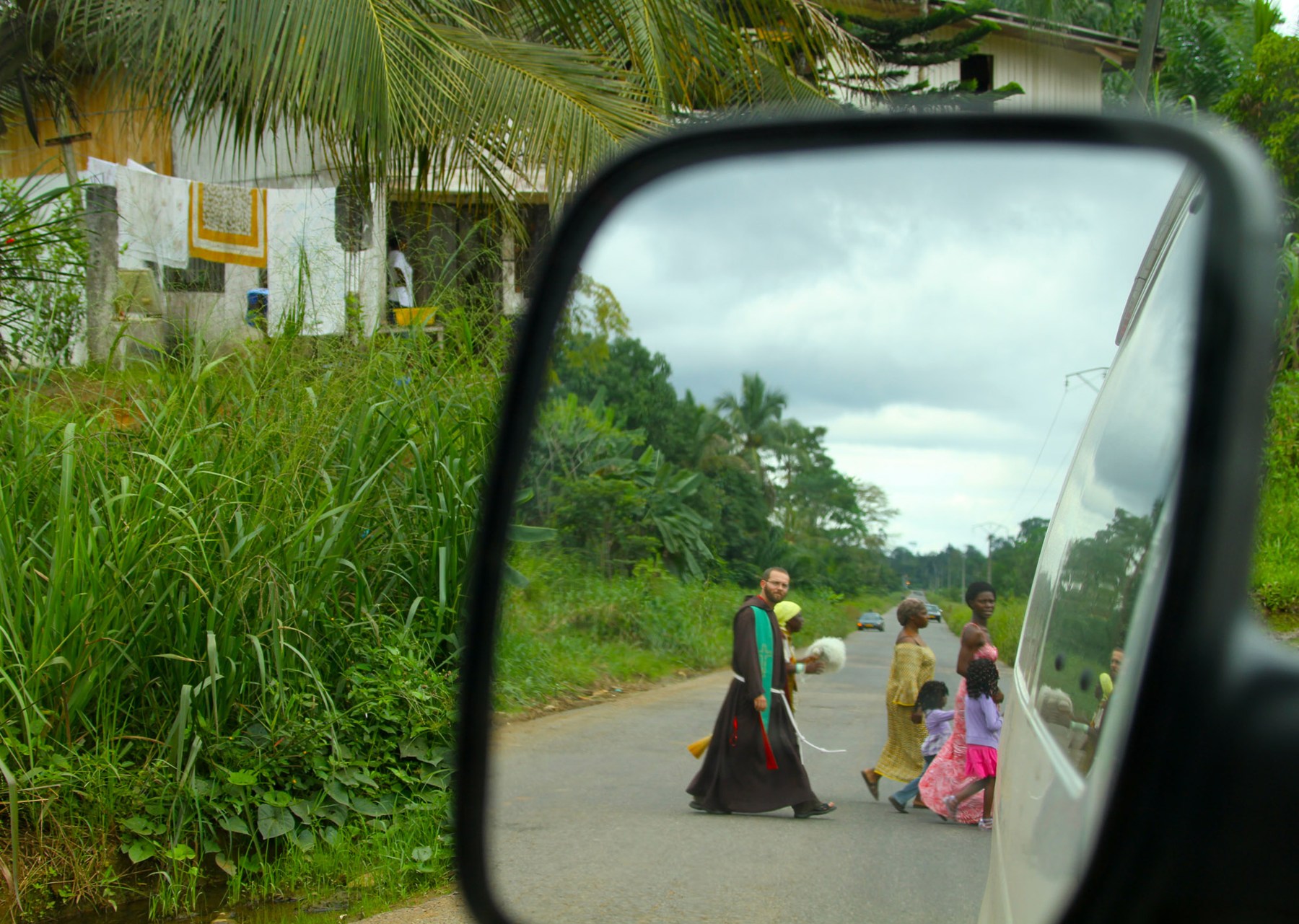

This image is part of a larger body of work called "Fortification".
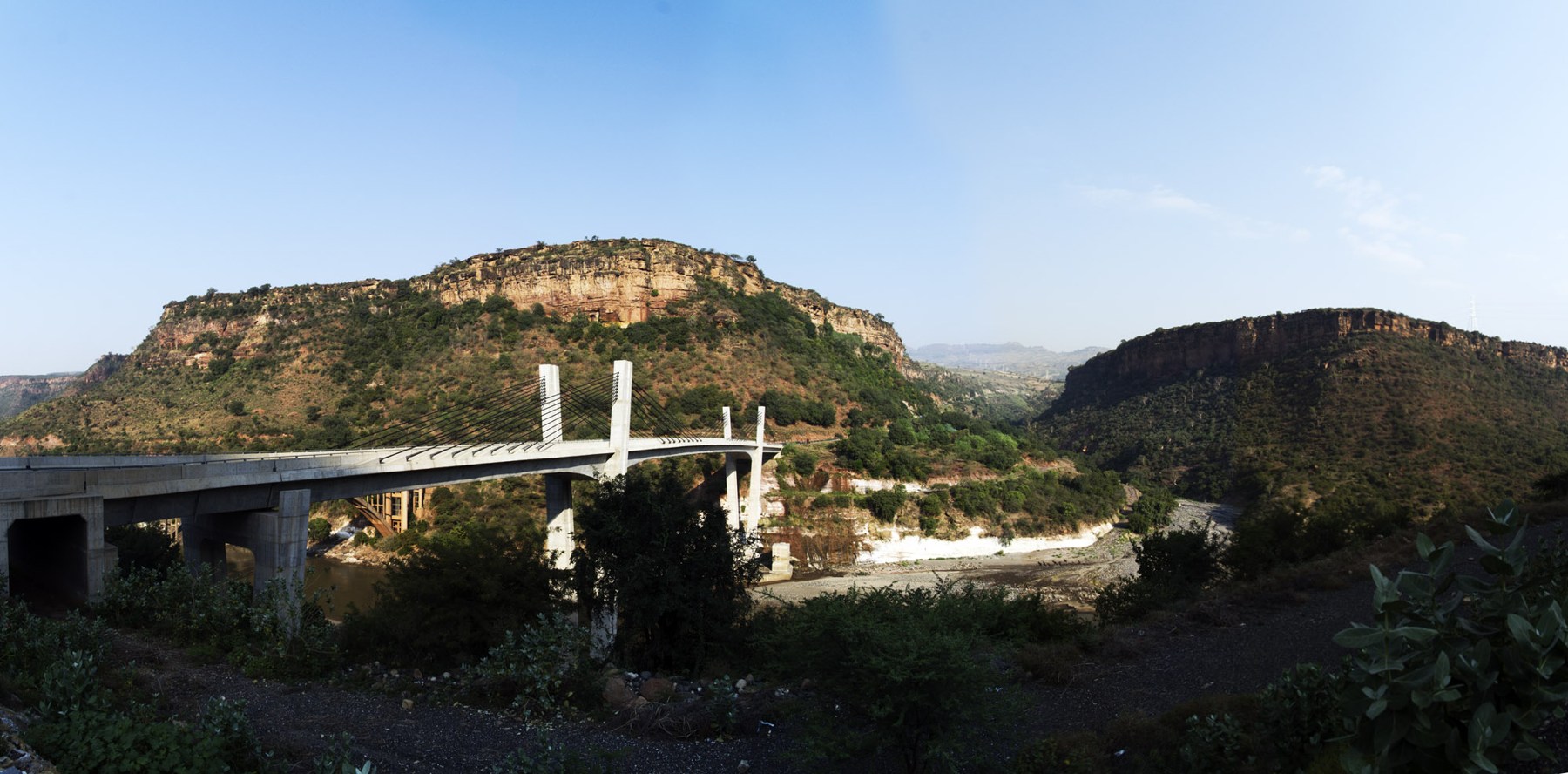
This is the longest bridge in Ethiopia, taken by Ala Kheir during a brief stop of the IB 2011 team on the way to Addis Ababa from Khartoum.

This image was made at the Utako Motor park in Abuja, during the team's brief stop in Abuja. It was the office of the President of the Motor Park association where the artist and his colleagues were waiting for information as regards the safety of travelling to Jos and Maidugiri. There was lots of concern for securirty given that the team would traverse maidugiri, the operational ground of Boko Haram, then Tchad and eventually Sudan all the way to Ethiopia
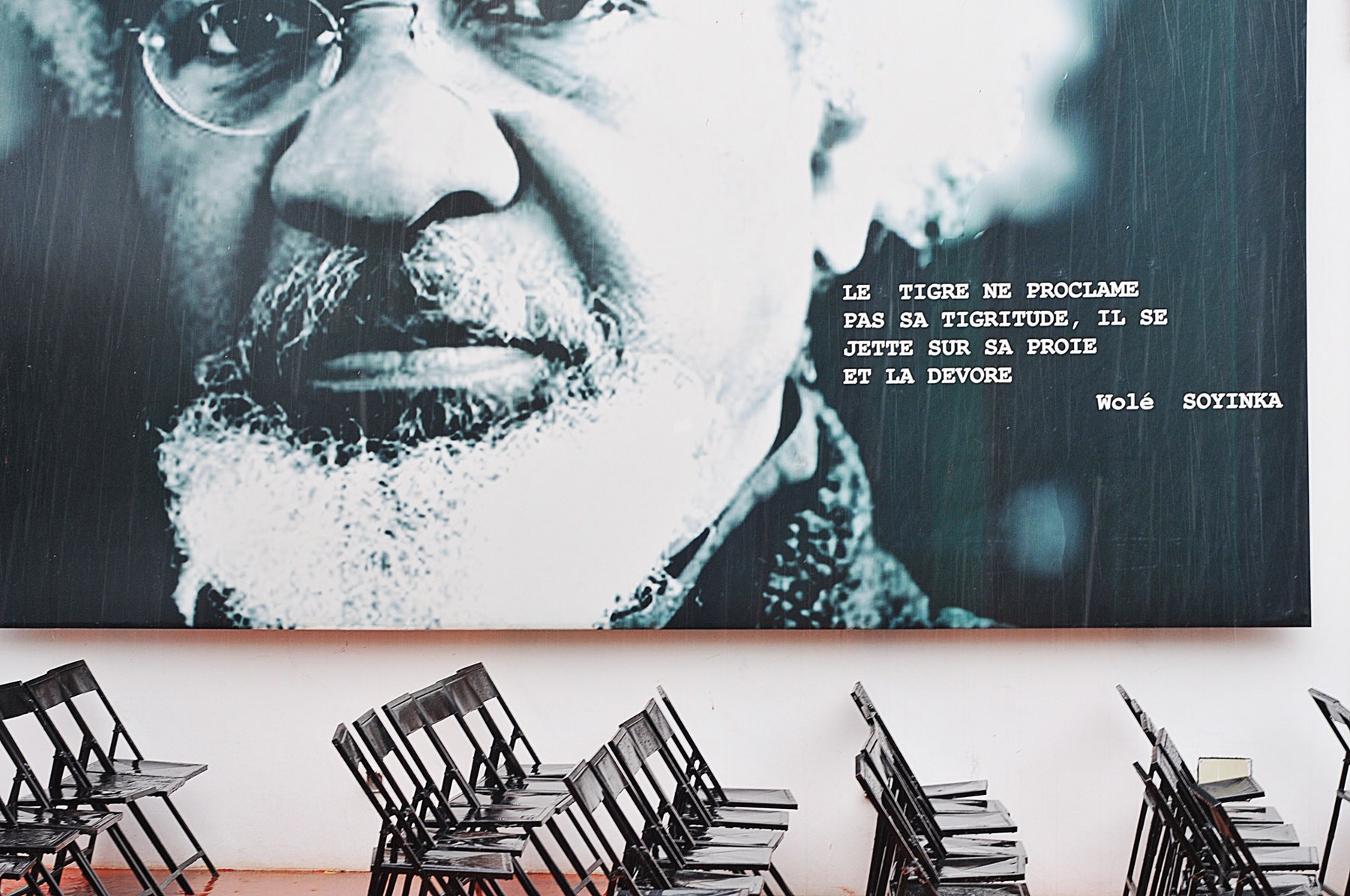
This image was made at Espace Tchif, an art and cultural space founded by an artist of the same name (Tchif), this is the image of the renowed Nigerian writer, Wole Soyinka at the Theatre space of Espace Tchif. The image was made in 2010, during the second edition of the Invisible Borders Road Trip.
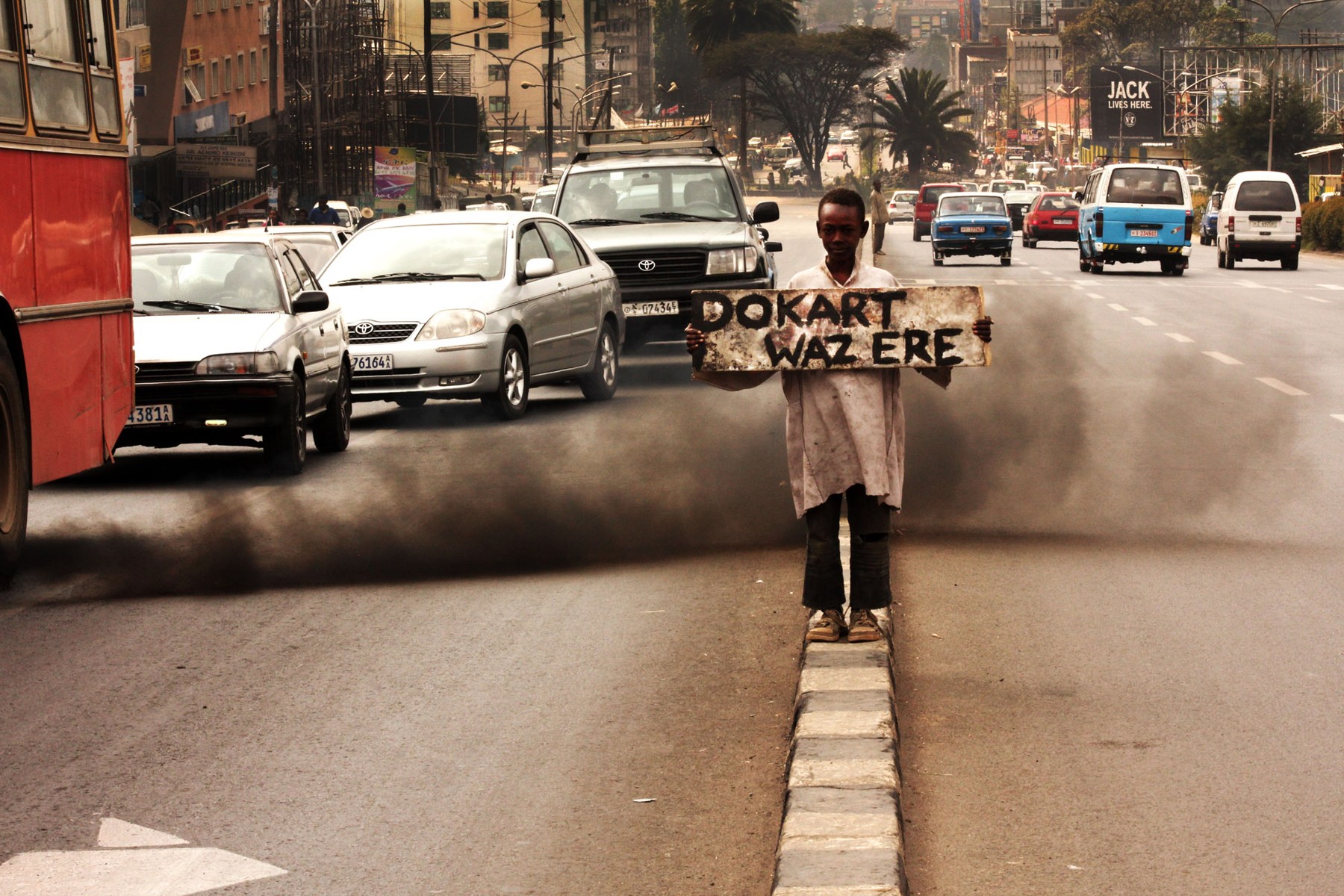
This image was made by Kemi Akin Nibosun, and is a part of a body consisting of photographic interventions in public spaces. Kemi created placards with her initials POKArt with the extension "Waz Ere" to indicate the awareness of her presence as she traverses borders of uncertainties. This work, like so many attests to the perfomative nature of the road trip, where the artists make attempts to play with objects, space and self, all on the go. Works like these are spontenous renditions of thought processes and reflections while immersed in the tangibility of the road trip.
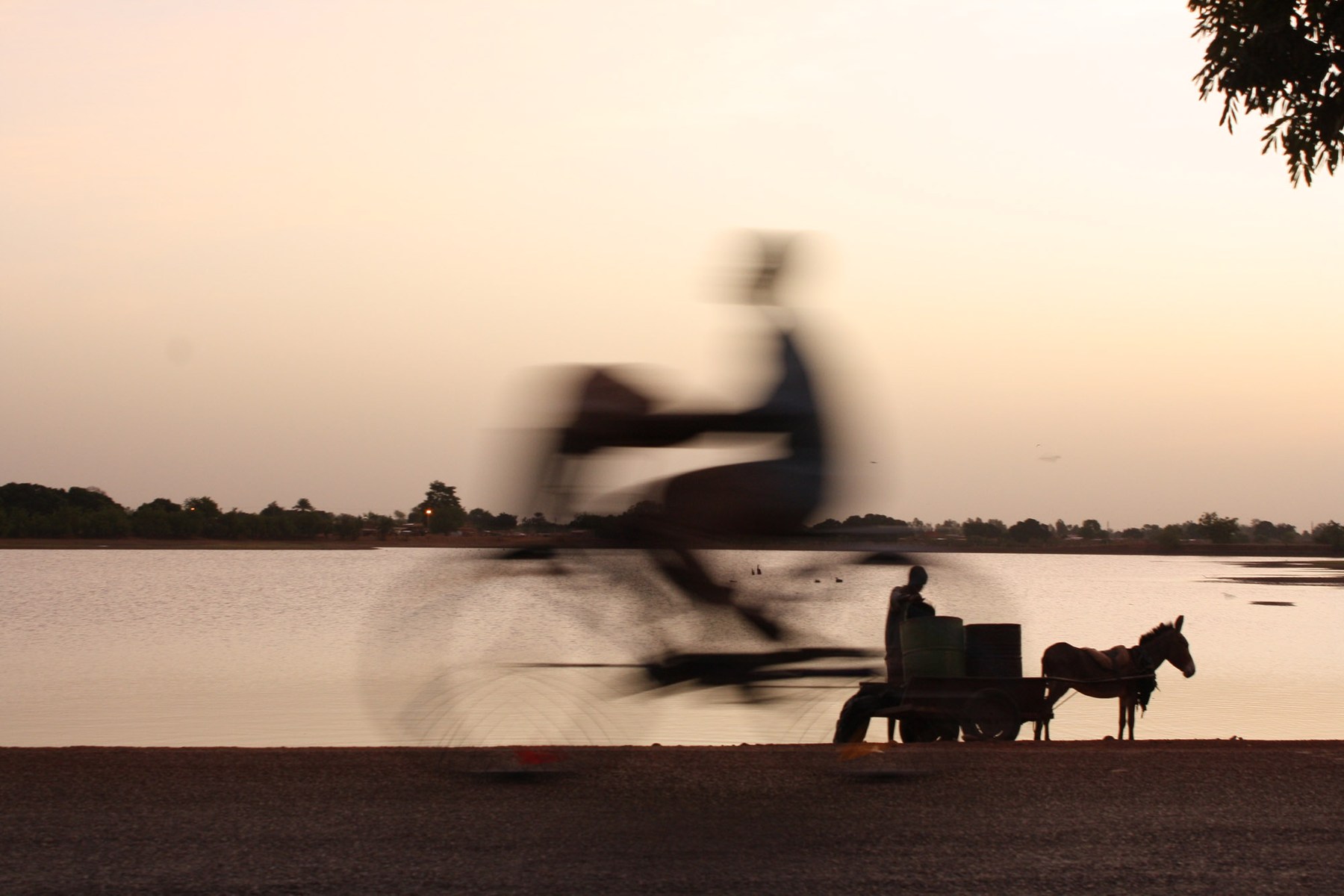
This image was made by Charles Okereke during the 2nd edition of the 2010 road trip from Lagos to Dakar. The location of this image is situated somewhere in Mali.

One of Jumoke's project during the 3rd edition of the road trip was the "Faces" project. Throughout the trip from Lagos to Addis Ababa, she photographed faces of individuals that to her she found compelling. According to her, a face can be a reflection of an individual's internal circumstances, or a barrier shileding his or her internal state of being. This she tries to capture, concentrating a whole lot in the architecture of the different facial features of the people from one country to the other.
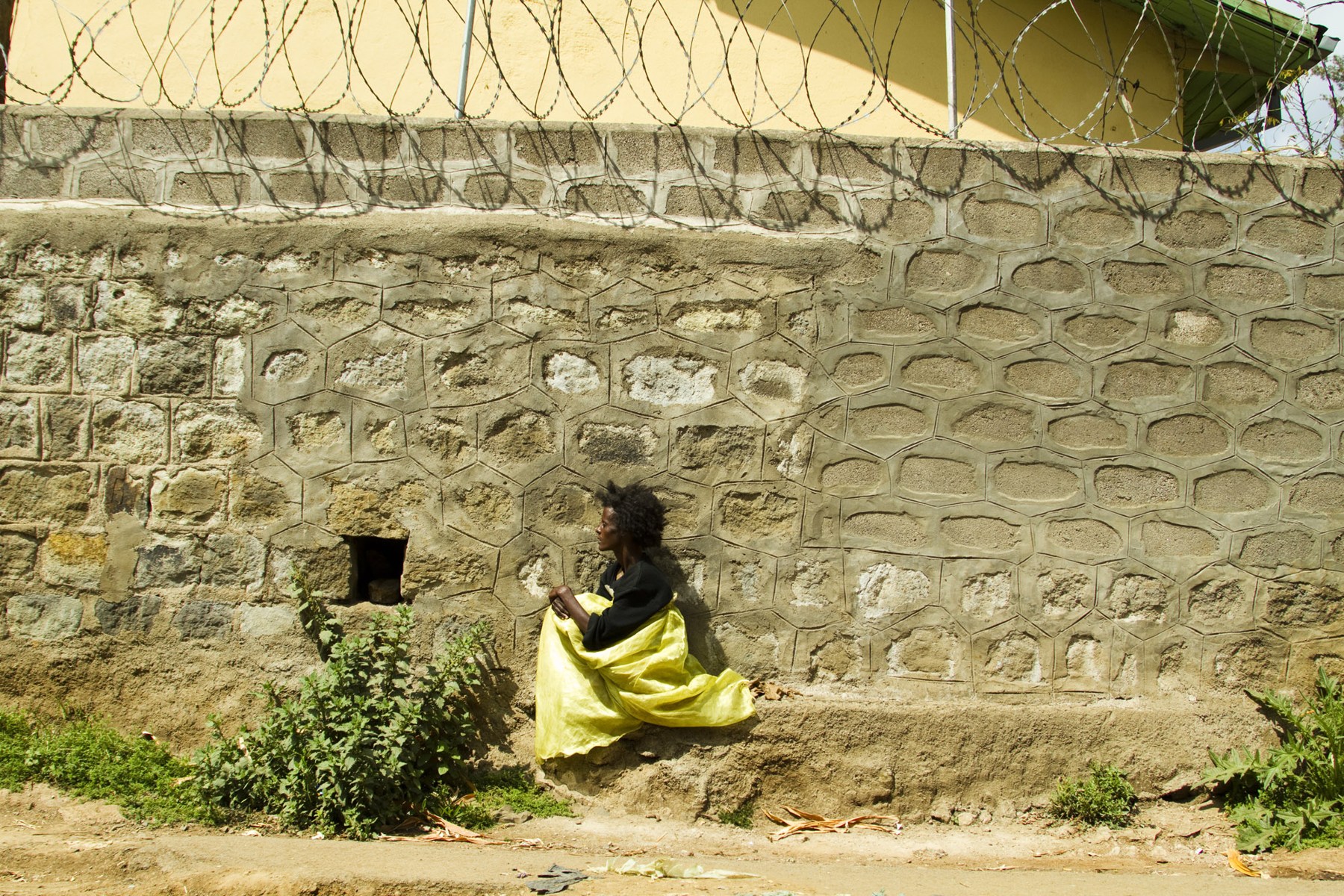
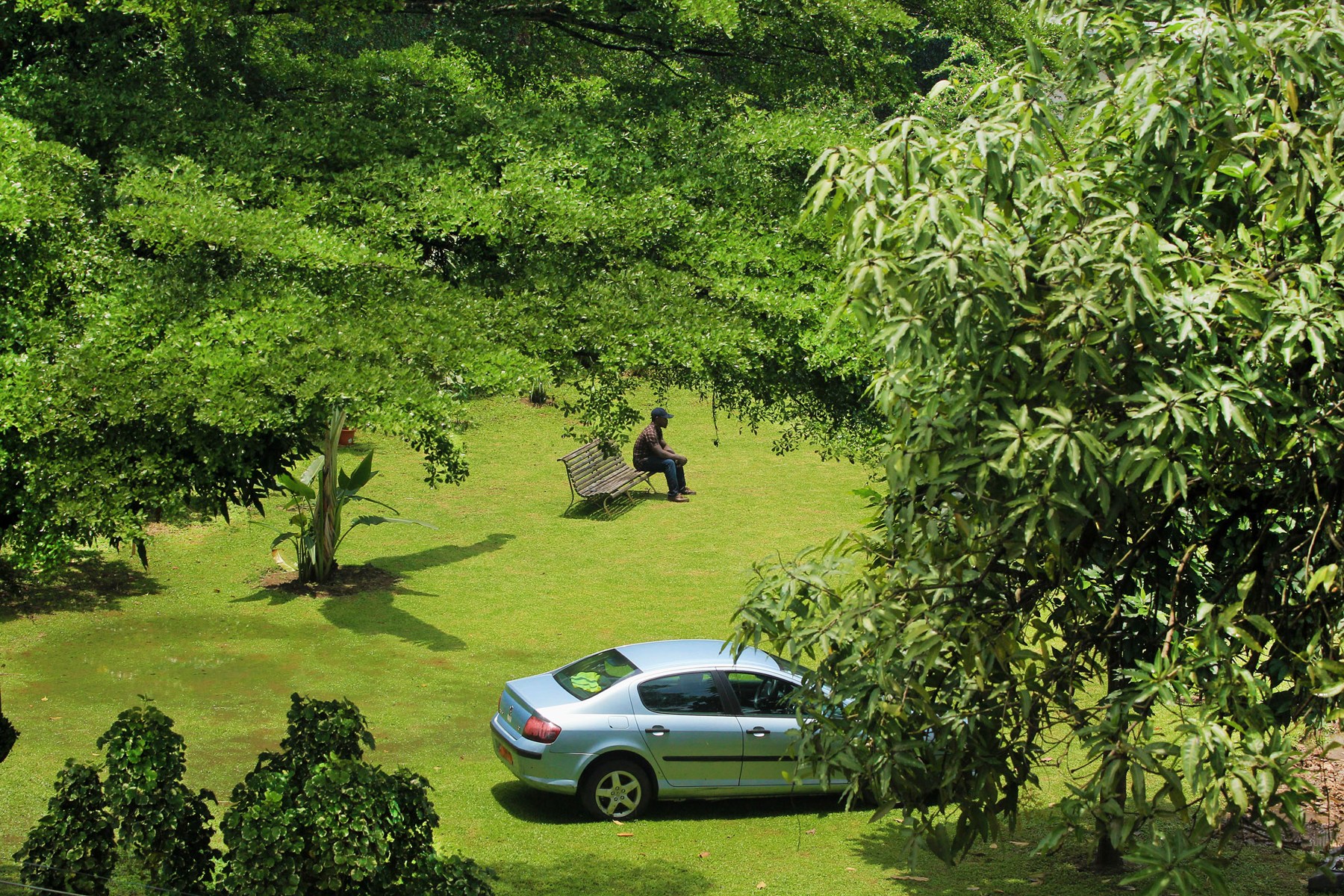
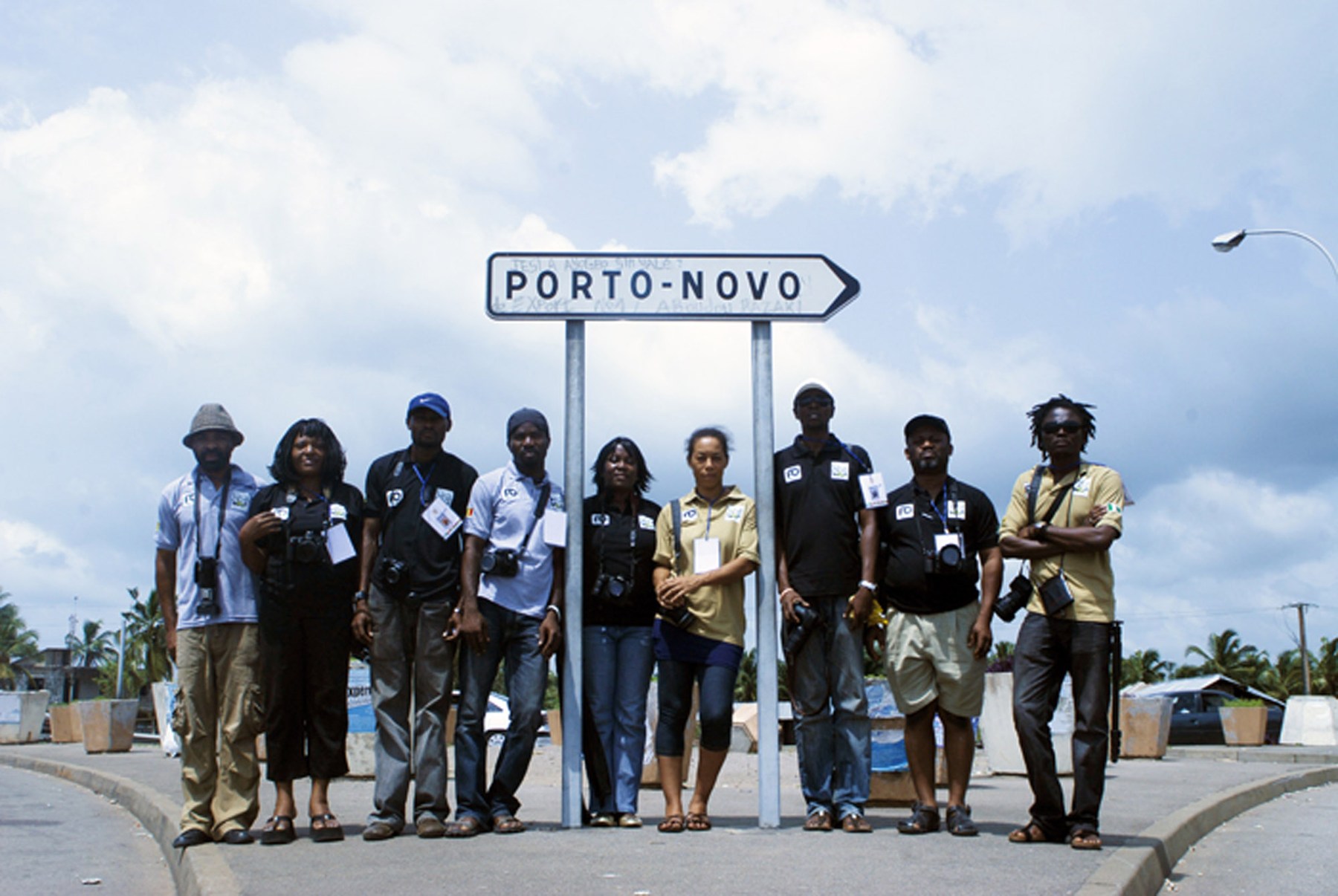
This is one of the first group images made in the Invisible Border Project. It is a sequel to Uche James-Iroha's "Line Up" series that he has always worked on long before 2009. Here he lines up all participants of the road trip. From left to right we have Charles Okereke, Lucy Azubuike, Ray Daniels Okeugo, Chriss Aghana Nwobu, Adenike Adesuyi-Ojeikere, Unoma Geise, Uche Okpa-Iroha, Amaize Ojeikere and Emeka Okereke (with Uche James Iroha making the photo). This image with the sign pointing towards Porto Novo, another city in Republic of Benin – is symbolic of the notion of collectivity that often forms the undertone of many of the works created during the project, indeed one could say that this notion of collectivity served as the departure point from which we approached the notion borders, in attempts to understand the implications of its limitations.

Emeka Okereke: "This is image was a result of performative collaborations between the partcipants of the road trip, but also a passerby, whom we stopped in his tracks and asked for his umbrella in order to make this photo. This very act of lending his umbrella to us, now constitute one of the ways we invite the audience to become actors in a collaborative creation of works. It is important to also note that what sparked the intention to make the photo was the fact that I had been informed by Landry that the spot used to be the office of a very famous news agency notorious for their outspokenness in favour of the people against the government of Paul Biya who has been ruling Cameroun for over 30 years. This act of turning the spot into a space of contemplation was then imbodied by this image, but also by the intervention of the passerby who lend us his unbrella while he stood in the rain and watched us, as well as the Chinese man who was obviously running to his office, and in the process caused a "useful interjection". This very idea of the performativity in the process of creation is what we intend to expatiate in the reflections about the Invisible Borders project. The blurring of borders between the artists, the audience and the art created. How do we further affirm the agency of the spectator?"

This is a sattire in relation to the political situation in Tchad. Here we see the dictator and head of state Idris Deby Itno, sprawled out in white in a billboard which in turn is careful placed in Avenue Charles de Gaulle just between his Residential building and the airport of N'djamena. Images of these kind litter the whole city, championing the head of state as the messiah of the people, but in that same city, one need not walk too far to encounter appalling contradicitions of that very fact.
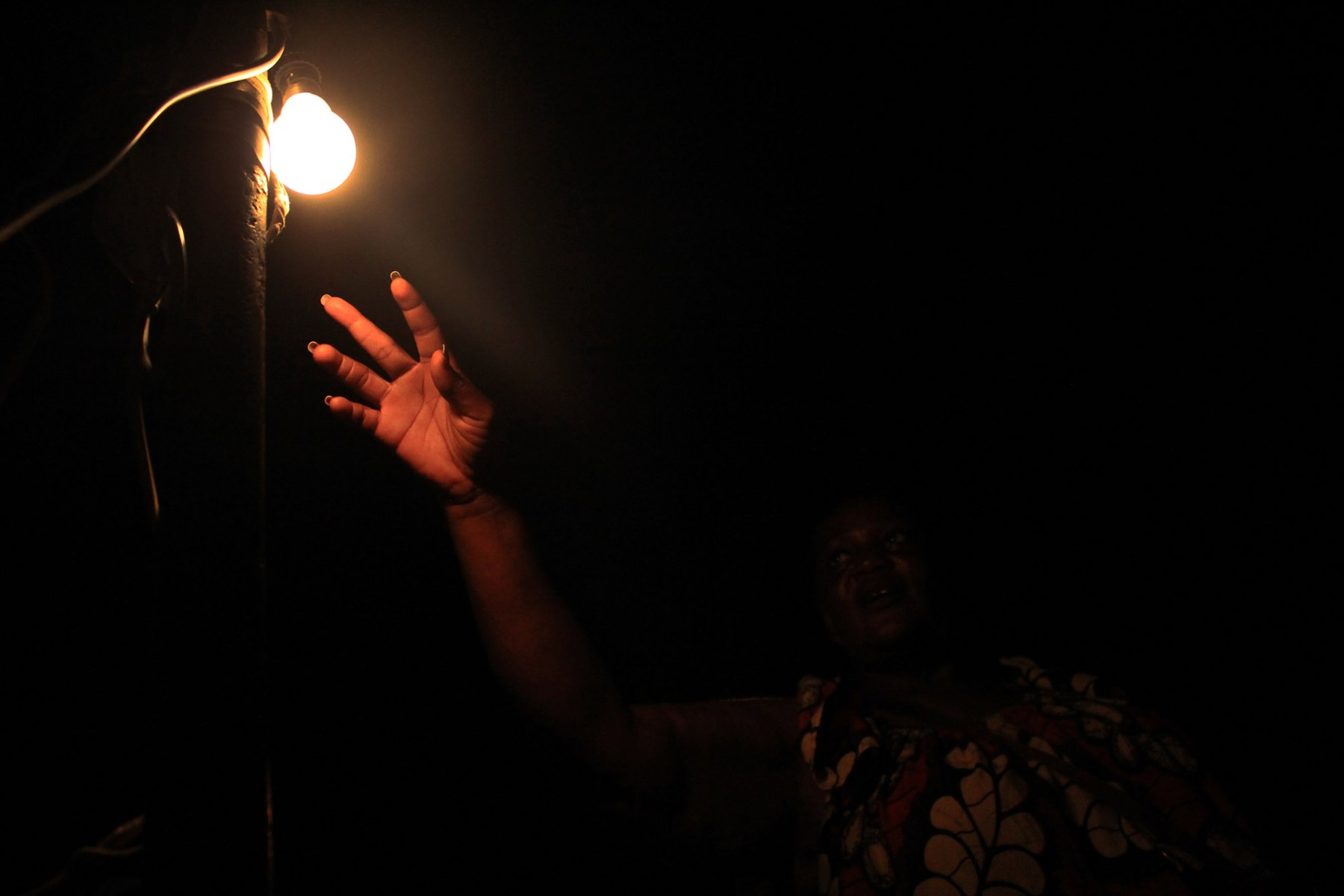
Lilian Novo Isioro is a photographer who is drawn towards photographing women, not for the mere sake of making an interesting subject out of them, but because she identifies with them in their struggles to transcend the stereotypes attached to womanhood. In her work during the Invisible Borders road trip 2012, she was dedicated to championing them, working hard to portray them not as victims of their circumstances but conquerors. This image is a part of larger body of work titled "Corporate Life of a Market Woman". She followed selected women in each city visited, spending time with them for the duration of her stay in that city while she photographs them in the process. This image is from Chantal, in Libreville, at her home after the day's work at the market. She provides for her family as the bread winner through selling peers and mangos. She has been doing that for the past 20 years.

Deidoboy is a young entrepreneur living in the bustling suburb of Deido in Douala. He makes customised T-shirts and jeans from local materials. Being Diedo’s finest clothmaker, he has been able to work with musicians and small business owners in improving their public image. His aspiration is to build a brand across Cameroon, Africa and beyond. He feeds his family with his increasing profit, works hard each day, making new friends and living his dream. Jide Odukoya spent most of his stay in Douala during the road trip, photographing him, creating a narrrative of his endeavours, his entrepeneurial nature as a symbol of that defiant idealistic energy imbued in most of today's generation of Africans, more specifically of Douala.
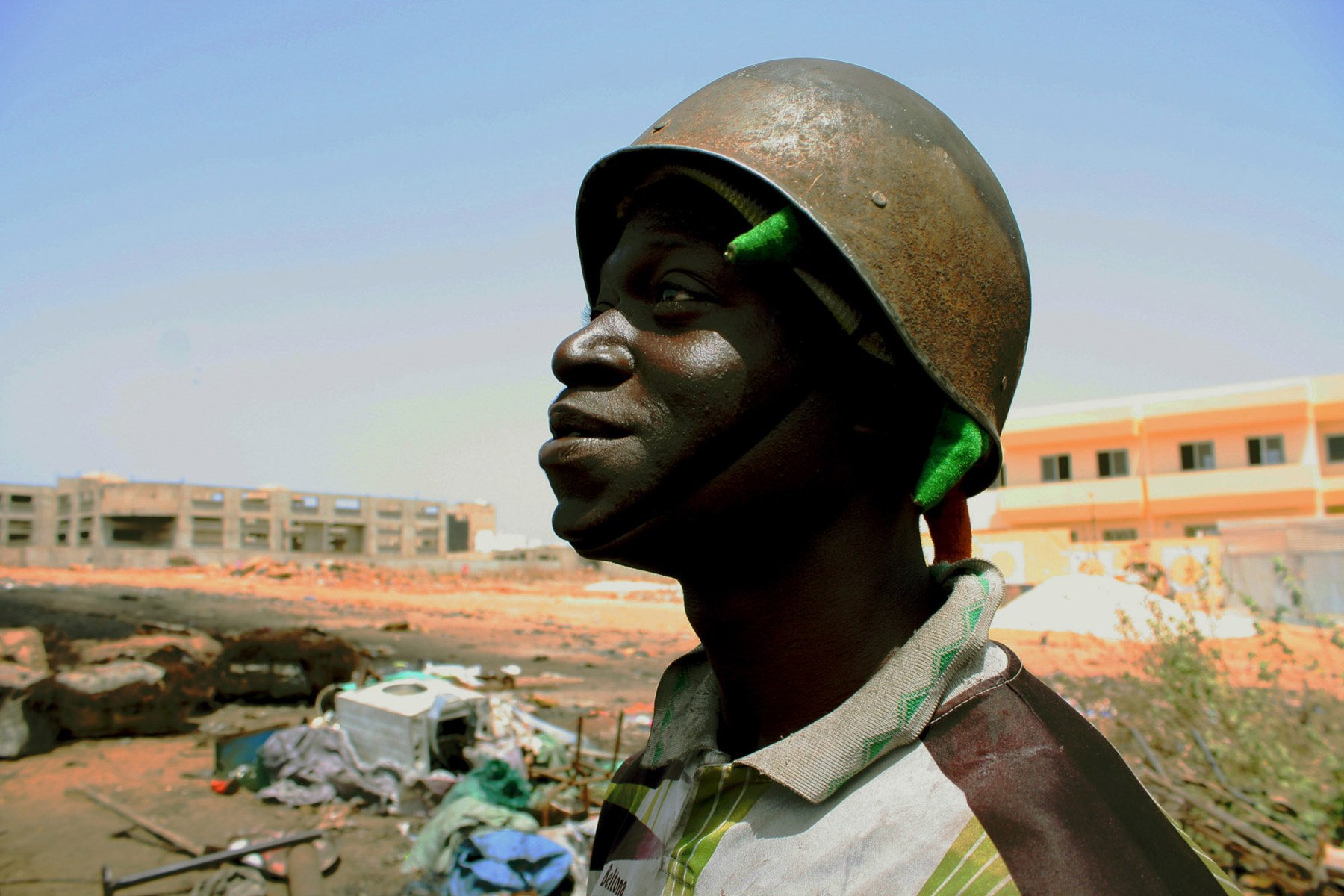
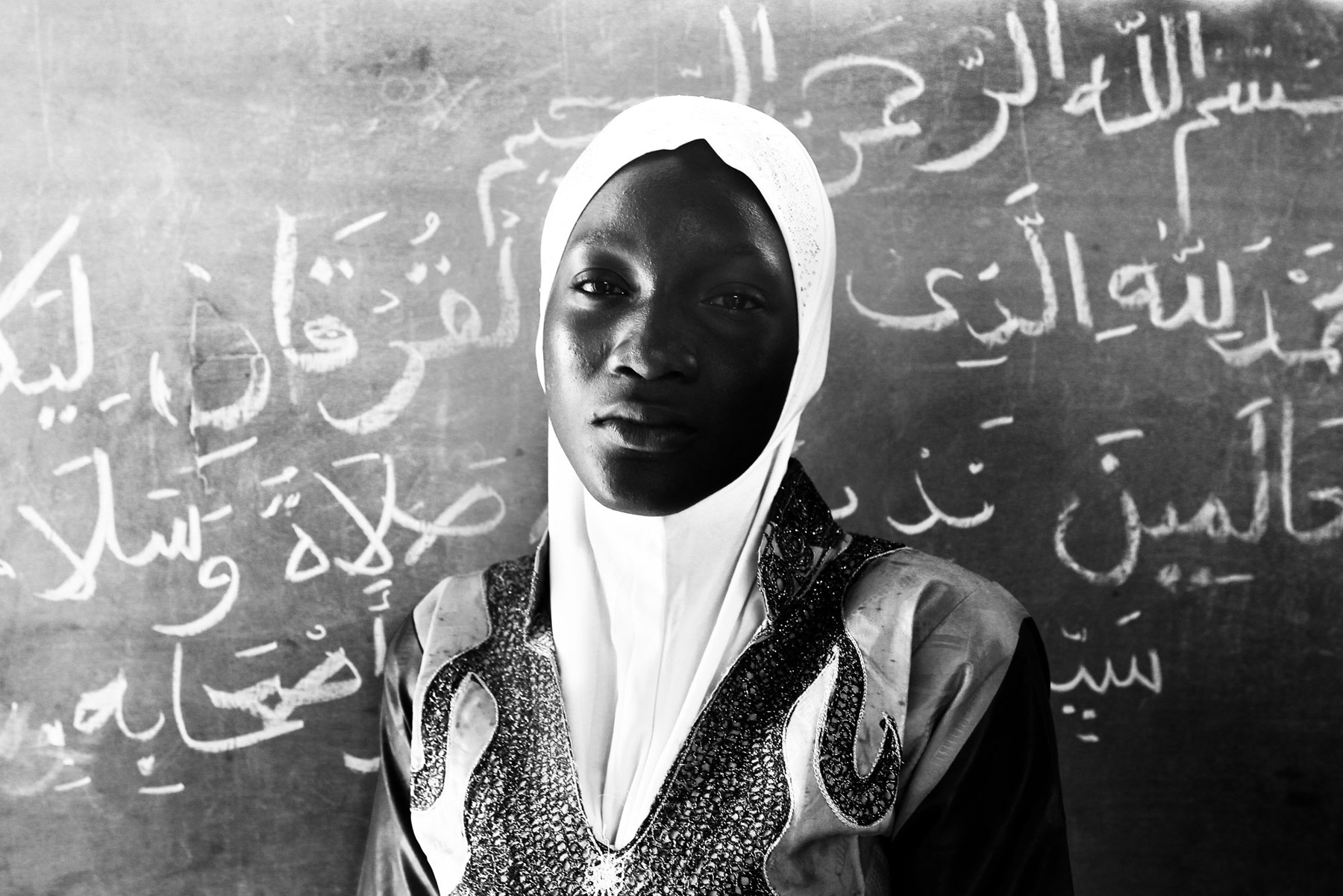
Gabon is a sparsely populated country with about 1.6million people. It is estimated that over 300,000 Nigerians live in Gabon. Most of its citizens work in the oil rich government establishments; while foreigners dominate the local business in areas of food, clothing, music sales, electronics, auto spare parts and taxi. These portraits explore the paradoxical stories of Africans living on another African soil with reported incidents of xenophobic discrimination and socio-political nightmare. A number of Nigerians who fled Nigeria during the Biafran war are now resident in Gabon. There are also others who arrived travelling through a deadly sea in search of a promised greener pasture. Most would agree that the economy of Gabon is far better than Nigeria while some, entrapped in circumstances far beyond their control, feel there is no place like home. Their stories recount their experiences, the dangers of migrating through the sea, challenges of starting a new life in a francophone country, a frictional relationship with the authorities, and the threatening fear of returning back to their homeland as empty as when they came. Jide folowed a few of these nigerians living in Libreville photographing them consistently during his 10-days stay in the framework of the Invisible Borders road trip.

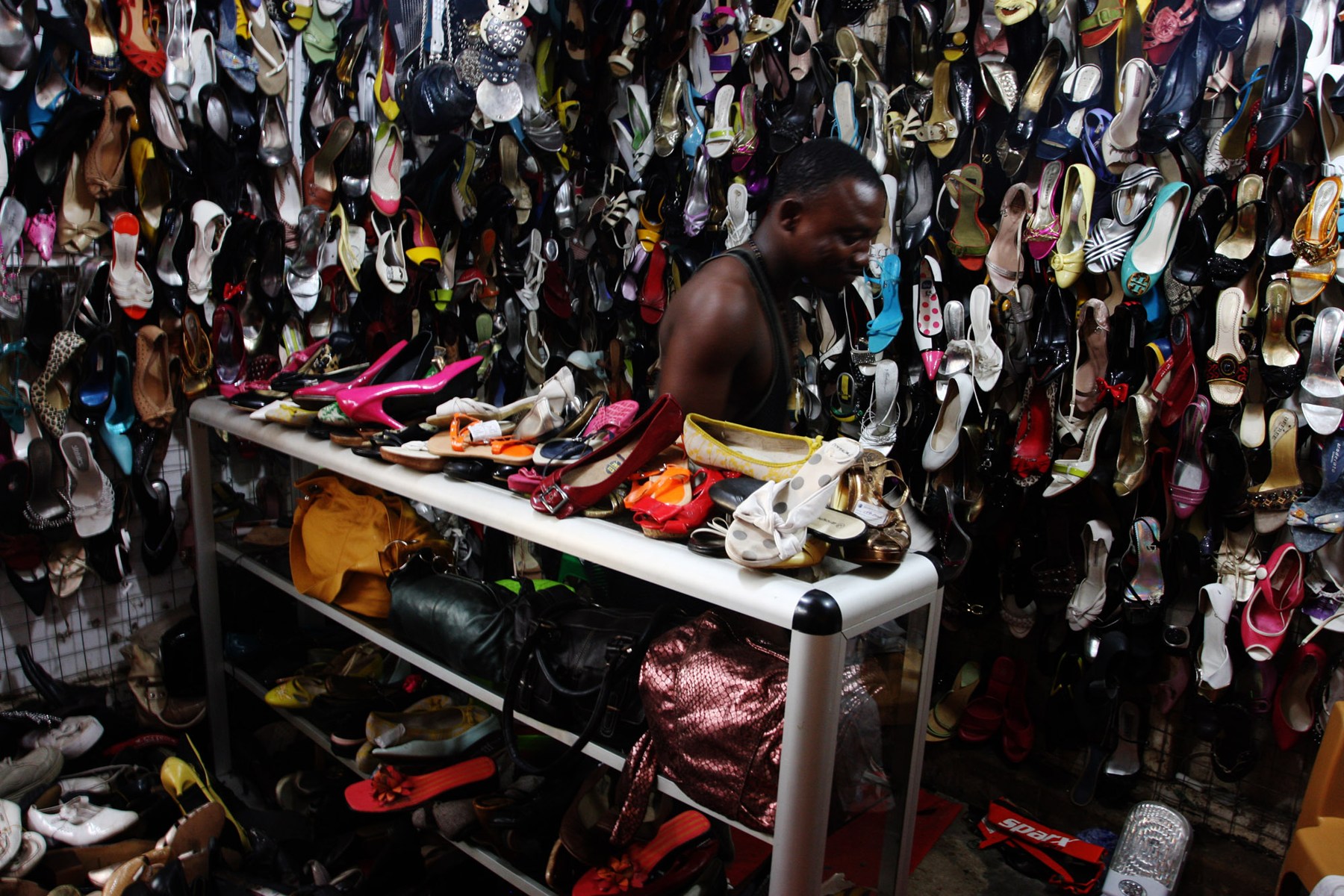
This photograph was made at the bubbling Circle Bus Stop in Accra, during the second edition of the Invisible Borders Road Trip. The image has been featured in many exhbitions since then including "The Accra Project" in 2013, in the first ever public space photography exhibition to take place in Accra

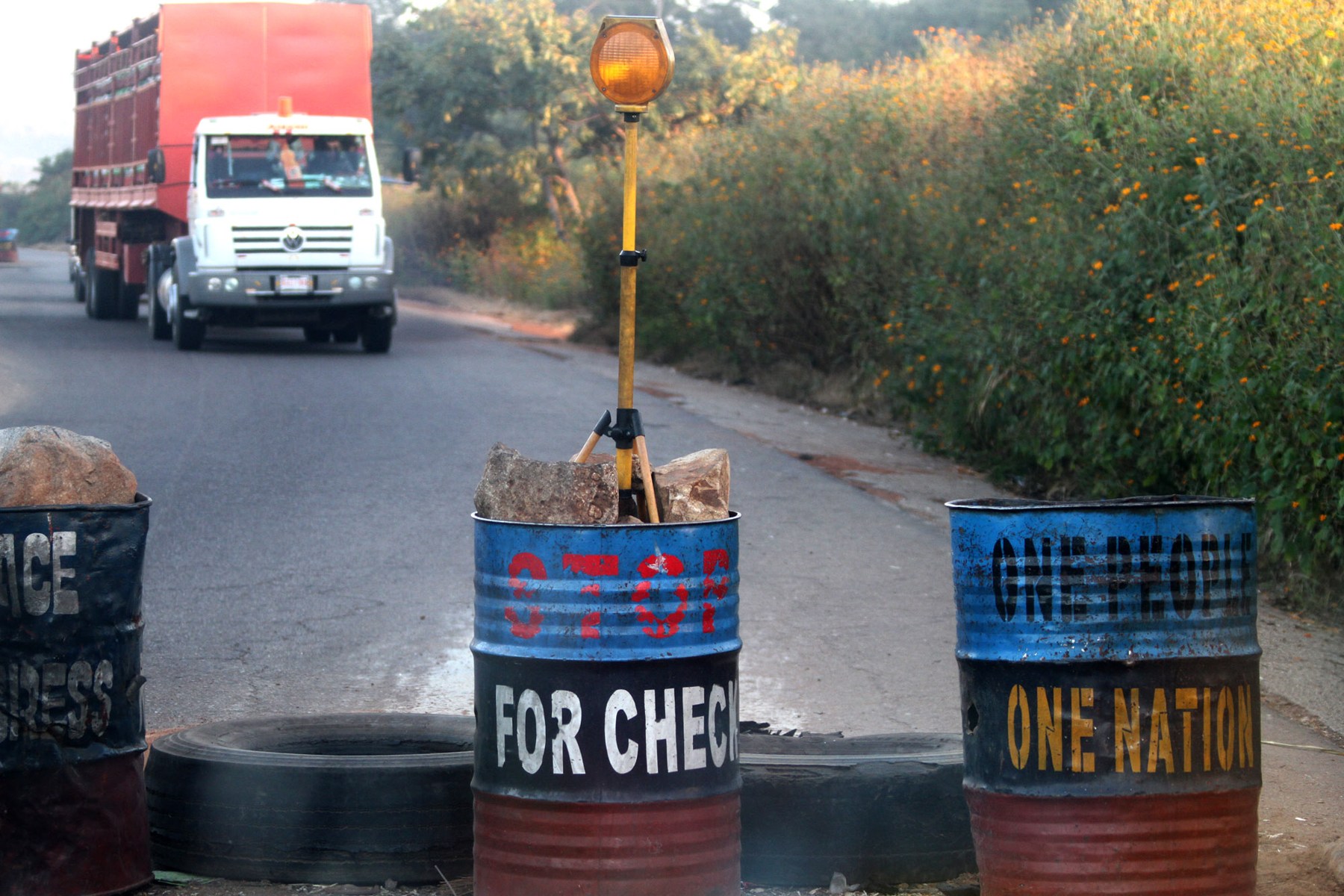
This image was made during the 2011 road trip, when the participants had to travel conflict ridden zone from Nigeria (Jos, Maidugiri) across Tchad and Sudan. Security was of the utmot concern on this trip. Here we see a check point on the way to Maidugiri in Bornu state, the seat of the notoriuous terrorist group known as Boko Haram. Emeka Okereke: my work often play with the parodox and juxtapostions of conflicting contexts. In this image we see the tension of war made even more urgent by the necessity to remind us of the ultimate justification of the war – that we are One Nation and One people. The same song that underlined that 1967 -70 Nigerian/Biafran war. and the problem has always been that many of those in the so-called nation find it difficult if not impossible to identify with the notion of One Nationhood, or at least they have seen no beneficial reason to.

The 2011 road trip was very challenging, more so because we traveled with a lot of caution given that our route was all conflict ridden. When we got into ethiopia, we had our first sense of relief, but also a sense of accomplishment. This portait was a manifestation of that. Pictured from left to right is: Emmanuel Iduma, Emeka Okereke, Kemi Akin Nibosun, Ala Kheir, Ray Daniels Okeugo, Nana Oforiatta-Ayim and Jumoke Sanwo.
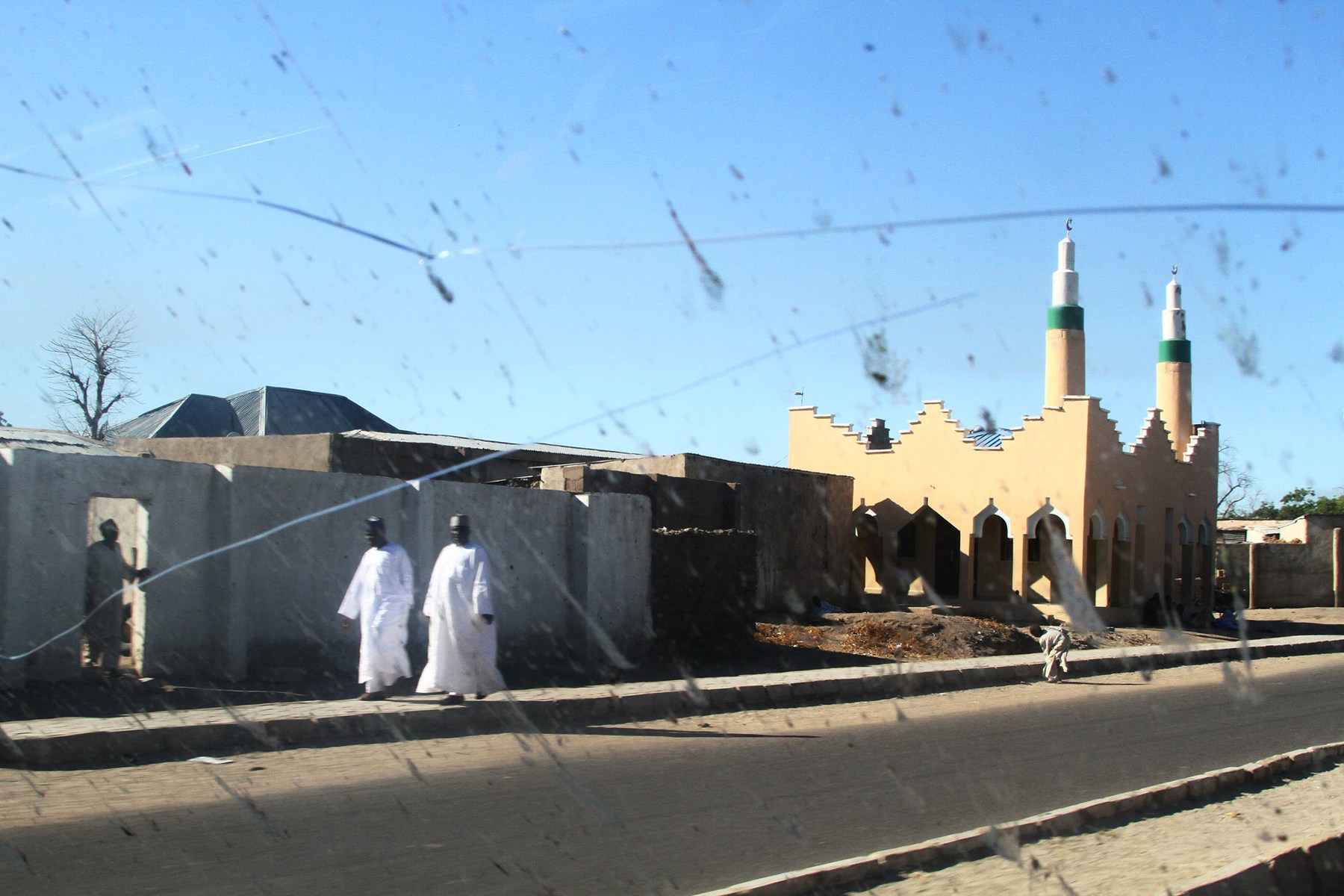
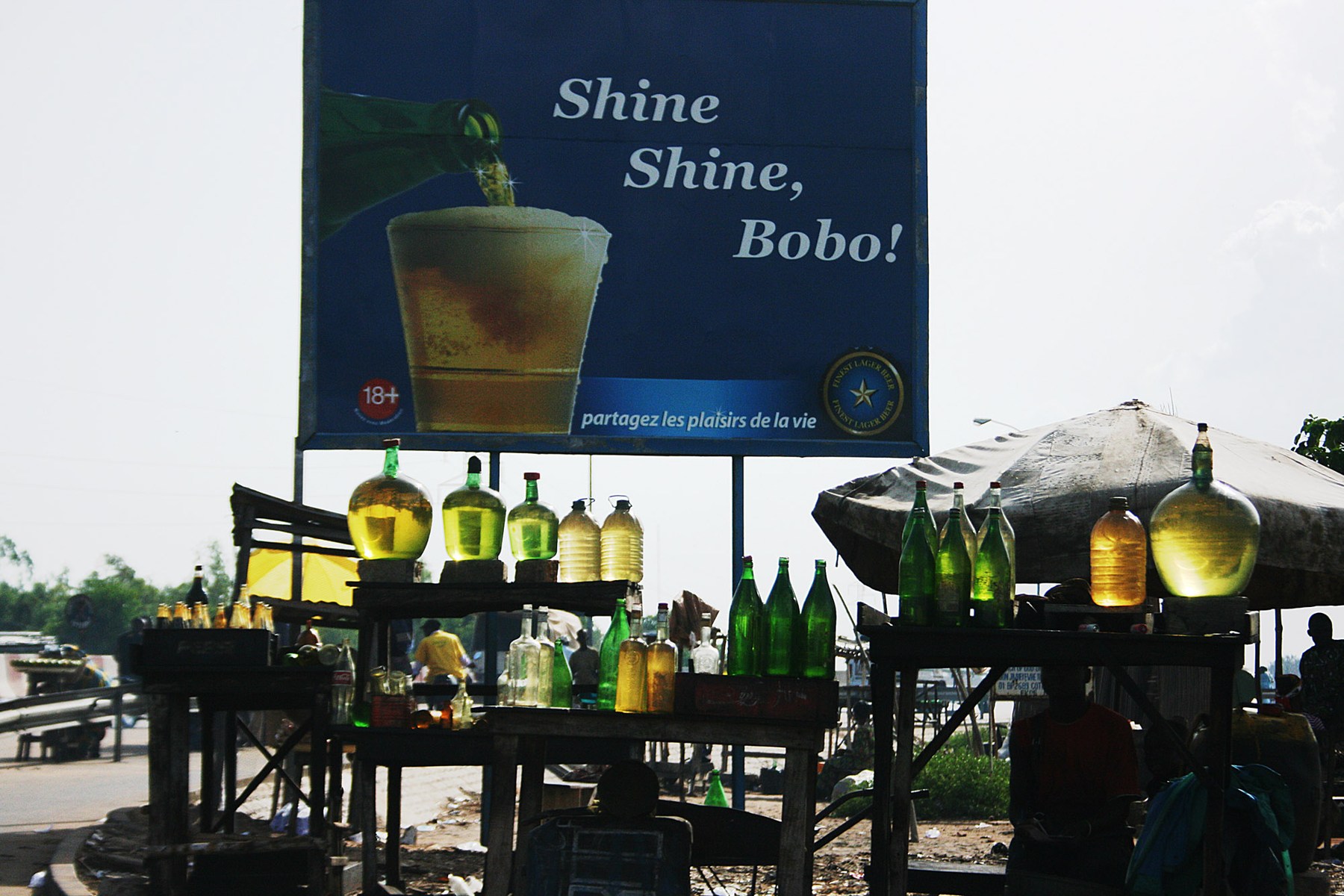
This photograph was made in Cotonou, in the Republic of Benin, just a few kilometres from Seme, the border town between Nigeria and Republic of Benin. One immediately appreciates how the border is an intertwining of the two entities they always tend to seperate. This photo is reminiscent of that tension between two entities consumed for different purposes yet struggles by virtue of coincidence, to find a point of convergence, an intersection so to speak.


This work was made during a brief stop in Onitsha en route Aba (still in Nigeria). This depicts an accident scene, a frequent occurance while on the road especially in Nigeria. But beyond that, this work work symbolises the adverse effect the excesses of consumamation. Here the fallen truck resembles a huge beast that has spilled the content of its bowels. and the personage standing calmly on it portrays the triumph of the humane despite these shortcomings.
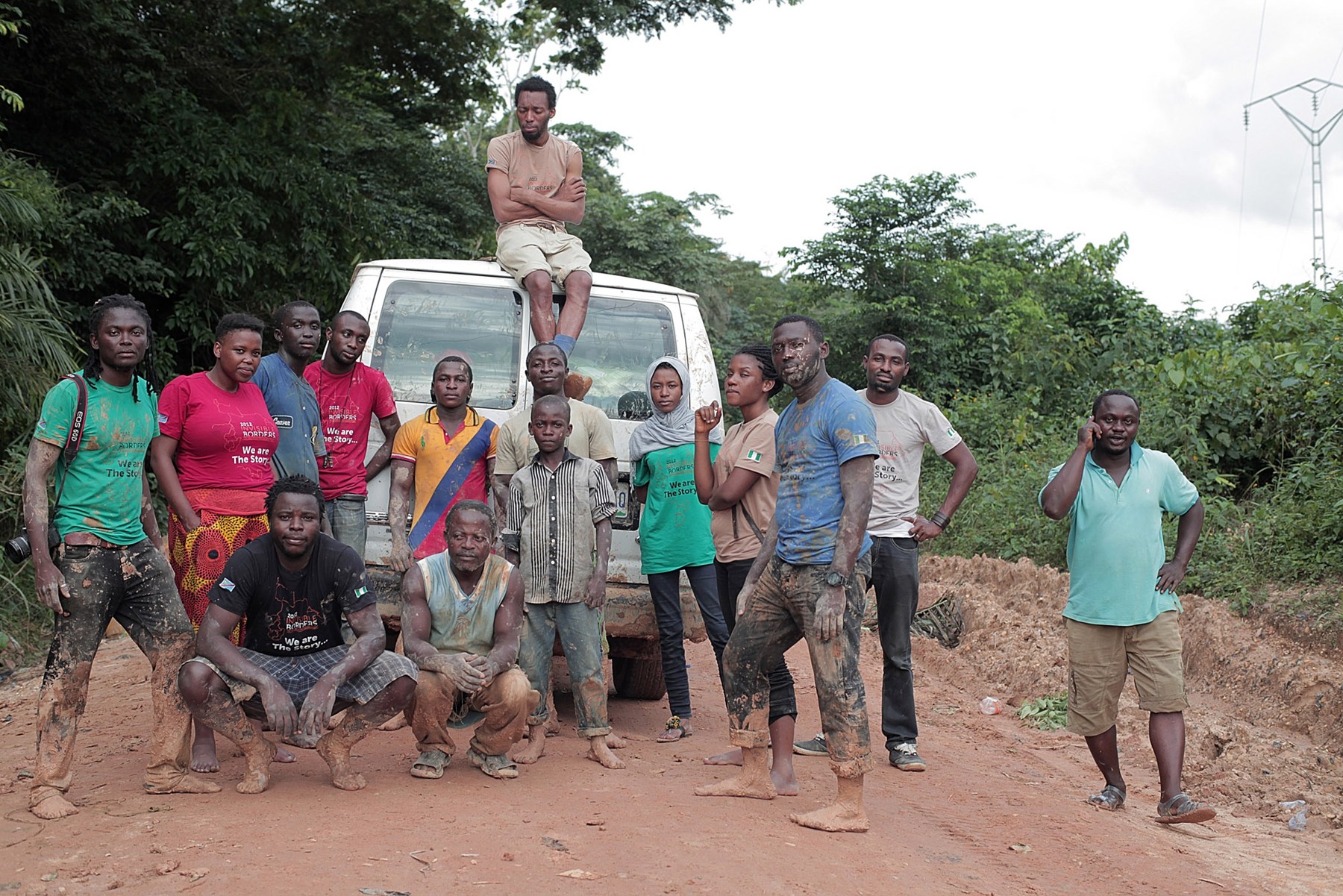
This image was made after three days of getting stuck in a one kilometre stretch of mud on the Ekok-Mamfe Road in Cameroun. This route is a Trans-African highway, linking Nigeria and Cameroun, it has not been tarred since the independence of both country. It is one of the only way the cross from Nigeria to Cameroun via the South of both countries.
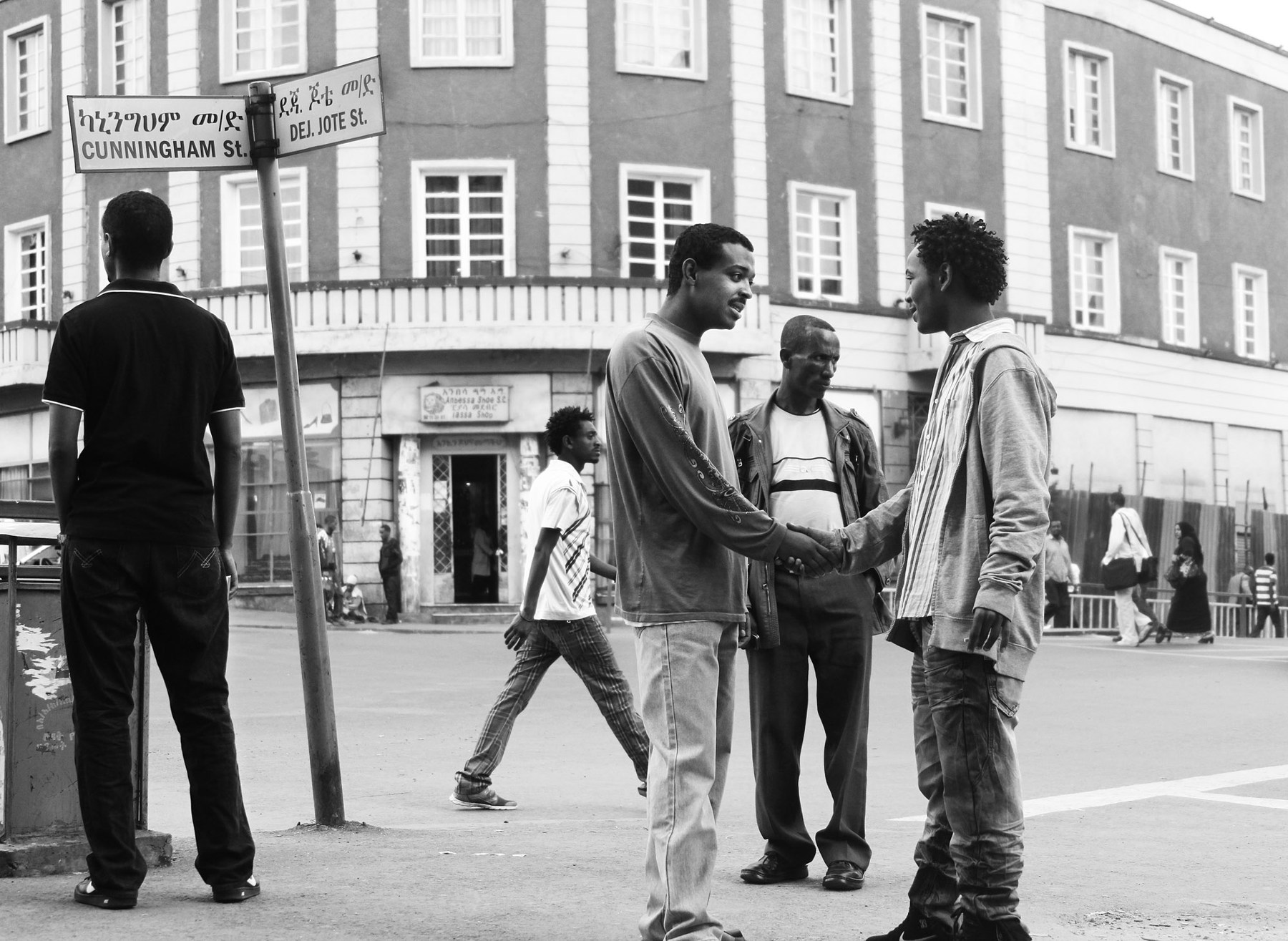
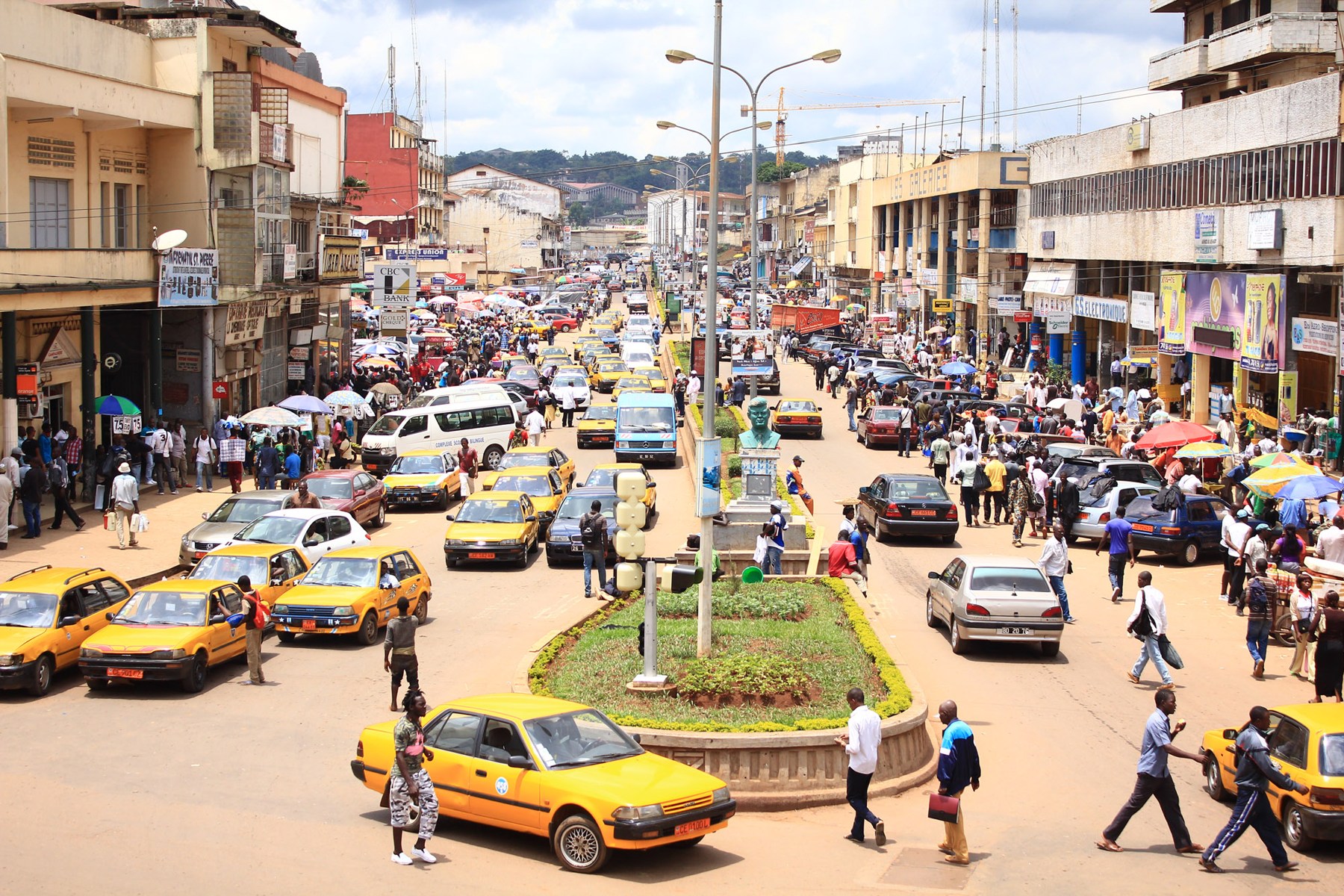
Emeka Okereke: "When we set out to photograph the continent through these travel, what was immediately interesting was that it came natural to us to begin with our everyday space. And that was how we began. This for me was the first real attempt at transcending the borders. Because most of the time photographers or artists from the continent in general had imbibed the mentality that to tell a story, one must ignore the everyday occurrences which by the way were seen as banal. The quest for the extra-ordinary led to a certain contempt for everyday space. But when we look at this in the African context, this is not true, there is nothing banal in the everyday space, on the contrary that space is where the temperaments, personalities and the perpetual attempt to transcend societal limitations become all the more apparent. This is image for me embodies that very idea"

Lilian Novo Isioro is a photographer who is drawn towards photographing women, not for the mere sake of making an interesting subject out of them, but because i she identifies with them in their struggles to transcend the sterootypes attached to womanhood. In her work during the Invisible Borders road trip 2012, she was dedicated to championing them, working hard to portray them not as victims of their circumstances but conquerors. This image is a part of larger body of work titled "Corporate Life of a Market Woman". She followed selected women in each city visited, spending time with them for the duration of her stay in that city while she photographs them in the process.
